






If your child struggles with allergies, hayfever or asthma, bedtime can become a worry. Mattresses live right under their nose for 8–12 hours a night, and that warm, cushioned surface can collect dust mites, dander and other irritants over time.
A hypoallergenic mattress in Australia is not a magic cure, but the right design and materials can make it much easier to keep triggers under control—especially when you combine it with smart bedding habits. This guide explains what “hypoallergenic” really means, which certifications are worth paying attention to, and how a kids mattress like Sleep Republic’s can fit into an allergy‑aware bedroom.
What “hypoallergenic mattress” really means (and doesn’t)
“Hypoallergenic” is often used in marketing, but it does not mean a mattress contains zero allergens or that it can prevent all reactions.
More realistically, a hypoallergenic mattress aims to:
- Use materials less likely to cause irritation for most people
- Reduce places where dust mites and other allergens can collect deeply
- Work well with protective covers that block common triggers
It does not:
- Replace medical treatment or action plans for allergies and asthma
- Guarantee that no dust mites or allergens will ever be present
- Make the rest of the bedroom environment irrelevant
Think of a hypoallergenic mattress Australia families can rely on as a strong foundation. You still layer dust‑mite‑proof protectors, regular washing and other routine care on top.
The main bedroom allergens to think about
Most of the time, the mattress is not the original source of allergens—it is where allergens settle and build up.
Common triggers around the bed include:
- Dust mites and their droppings
- Pet dander
- Pollen and dust brought in from outside
- Mould spores in damp environments
A dust mite proof mattress setup is really about how easily you can block and remove these over time, not about one single ingredient “killing” them.
Certifications that matter: OEKO‑TEX and beyond
When you are shopping for an OEKO‑TEX mattress in Australia or other certified options, you are looking for reassurance about what is in contact with your child’s skin and airways.
Useful certifications include:
- OEKO‑TEX Standard 100 (or similar textile/foam safety testing)
- Indicates the fabrics and foams have been tested for a long list of harmful substances.
- Reassures you that the materials are designed to be safe in close contact with the skin.
- Other foam and emissions certifications (depending on the brand)
- Focus on low emissions and the absence of certain chemicals.
- Aim to minimise strong, lingering odours and unnecessary chemical exposure.
These certifications do not make a mattress “allergen‑free,” but they do support the idea of a cleaner, more carefully controlled sleep environment—important when you are choosing a mattress for allergies and asthma.
Materials in a hypoallergenic kids mattress: what to look for
The way a mattress is built has a big influence on how it performs over years of daily use.
1. Support core
- Choose a design with a well‑made core (such as pocket springs or quality foam) that keeps its shape.
- A supportive core helps your child sleep well and reduces sagging where dust and debris can gather more easily.
2. Comfort and quilting layers
- Look for fibres and foams that are breathable and certified for safety.
- Avoid very loose, fluffy fill that compacts into dense pockets over time, as this can trap more dust.
- A kids mattress should feel supportive‑medium rather than ultra‑plush, which can be better both for posture and for long‑term cleanliness.
3. Outer fabric
- Smooth, tightly knit or woven covers are usually easier to protect with a mattress protector and easier to keep clean.
- Fabrics tested under OEKO‑TEX or similar schemes add confidence that direct contact is safe for sensitive skin.
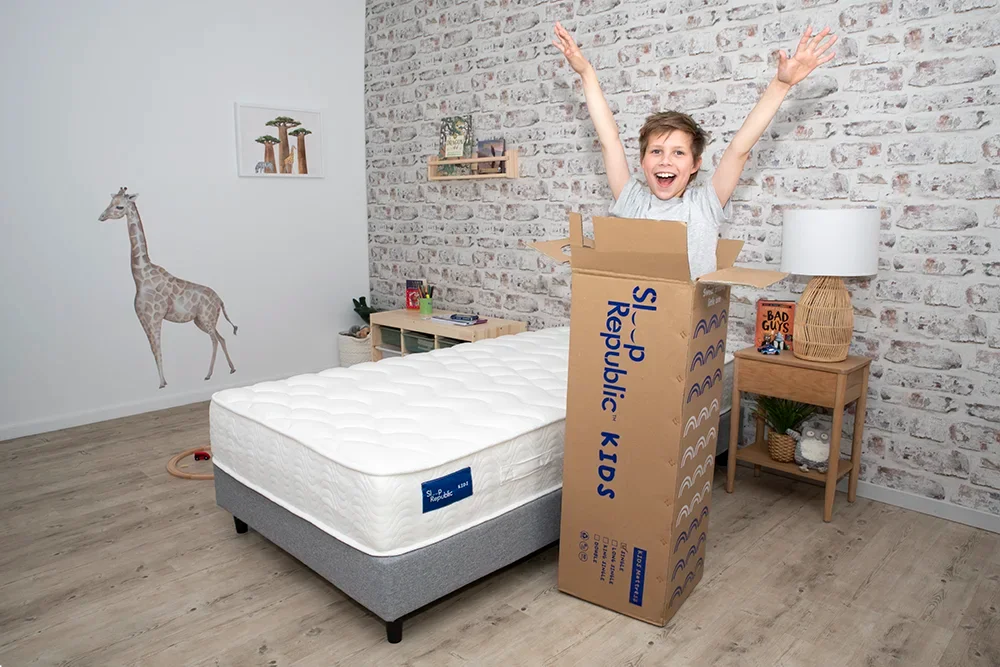
The Sleep Republic Kids Mattress is designed as a supportive, kids‑specific bed that focuses on comfort, support and material quality, which pairs well with hypoallergenic bedding strategies.
What really blocks dust mites and allergens
The real work of “blocking” allergens often happens above the mattress.
Dust‑mite‑resistant protectors
- A good dust‑mite‑resistant protector is one of the most important pieces in a hypoallergenic setup.
- Look for protectors that:
- Fully encase the mattress or at least cover the top and sides snugly
- Use tightly woven or barrier fabrics designed to keep mites from moving freely
- Are breathable and comfortable to sleep on
Washable layers
- Choose protectors, toppers and pillow protectors that are machine‑washable.
- Wash these regularly in hot water if the care label allows, as heat helps reduce dust‑mite levels.
Regular cleaning routine
- Vacuum the exposed parts of the mattress occasionally if the cover allows it.
- Air the bed when you strip it—this helps moisture escape and keeps the sleep surface fresher.
Combined, these steps create a dust mite proof mattress system, even though the mattress itself is one part of a bigger strategy.
Mattress for allergies and asthma: beyond the label
If your child has allergies or asthma, look at the mattress as a long‑term health environment, not just a one‑time purchase.
Consider:
- Support and growth
- A kids mattress should support a growing spine properly; a hypoallergenic label is not enough on its own.
- Breathability and temperature
- Overheating can make night‑time symptoms feel worse and promote a more humid micro‑climate that dust mites enjoy.
- Whole‑room environment
- Carpets, curtains, soft toys and pets all contribute to allergen load. The mattress is one piece of the puzzle.
An allergy‑aware household usually chooses a good quality kids mattress, adds protective layers and then manages the broader environment in line with medical advice.
Practical tips to build a more hypoallergenic kids bed
Once you have chosen a hypoallergenic mattress in Australia that you are happy with, you can maximise its benefits with a few simple habits.
- Use a dust‑mite‑resistant or allergy‑friendly protector
- Fit it snugly and wash it as recommended.
- Wash bedding weekly
- Hot water where fabric allows.
- Dry thoroughly before putting back on the bed.
- Limit and clean soft toys
- Keep only a few favourites on the bed.
- Wash or tumble‑dry them regularly according to care labels.
- Keep pets off the bed (if they are a trigger)
- Pet dander is a common allergen; keeping animals out of the bedroom or at least off the bed can help.
These routines work hand‑in‑hand with a well‑designed kids mattress to support more comfortable nights.
FAQs: hypoallergenic mattress Australia
Does a hypoallergenic mattress stop allergies completely?
No. A hypoallergenic mattress reduces some potential triggers and can make it easier to control dust mites and irritants, but it does not replace medical treatment or eliminate all allergens from a room.
What should I look for in a dust‑mite‑proof mattress?
Focus on a well‑constructed mattress with smooth, quality fabrics and pair it with a good dust‑mite‑resistant protector. The protector is what mainly blocks mites from reaching and colonising the mattress surface.
Are OEKO‑TEX mattress certifications important?
OEKO‑TEX and similar certifications are helpful because they show fabrics and foams have been tested for many harmful substances. This supports a “cleaner” sleep environment, which is especially reassuring when choosing a mattress for allergies and asthma.
Is the Sleep Republic Kids Mattress good for allergy‑prone children?
The Sleep Republic Kids Mattress is designed as a supportive, kids‑specific bed using carefully chosen materials and modern construction. When combined with a good protector and regular cleaning routine, it can form a strong foundation for an allergy‑aware sleep setup.