







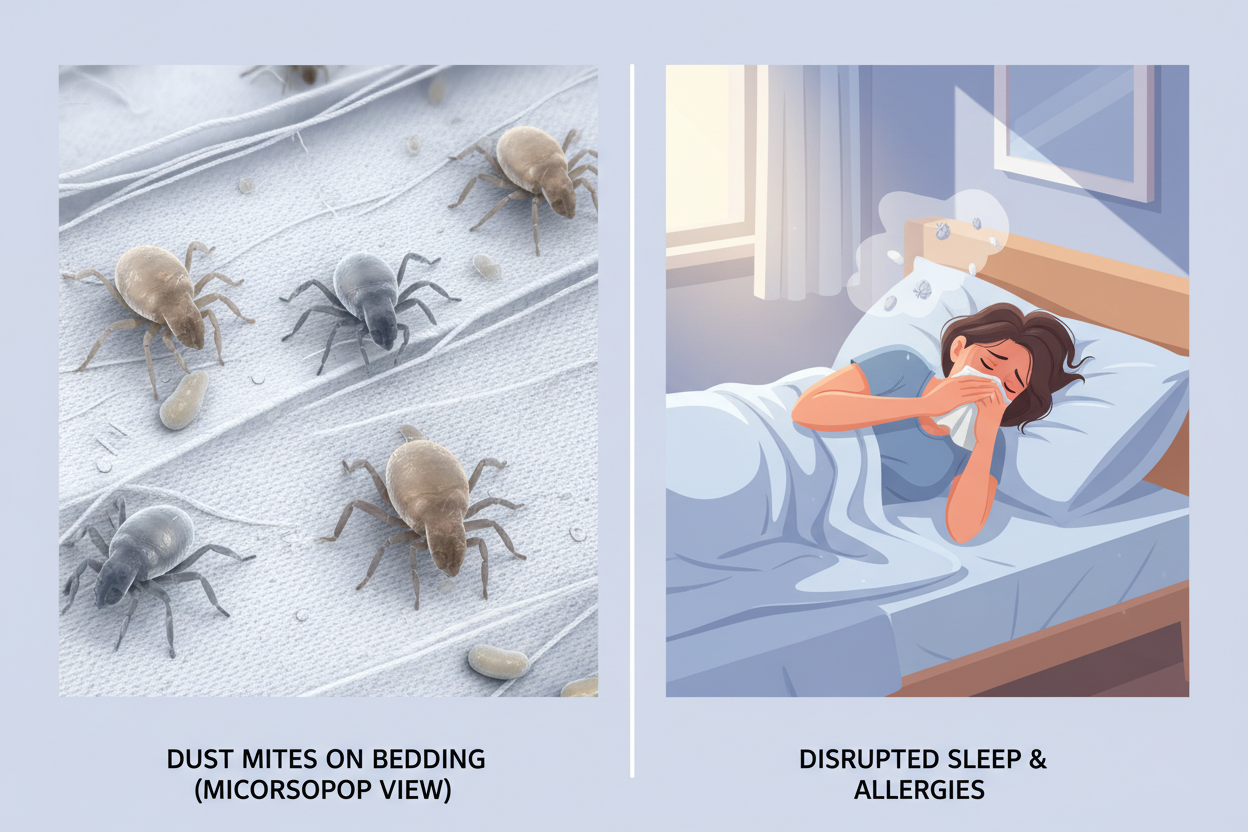
If you wake up sneezing, congested, or itchy, your mattress could be part of the problem. One of the most common hidden causes of nighttime allergies is dust mites — microscopic pests that thrive in warm, humid sleep environments.
For allergy sufferers, dust mites can seriously disrupt sleep quality, breathing, and overall wellbeing. The good news is that the right mattress and sleep setup can dramatically reduce dust mite exposure and help you sleep easier.
Here’s what you need to know — and the best mattress solutions for allergy sufferers.
What Are Dust Mites and Why Do They Affect Sleep?
Dust mites are tiny organisms that feed on dead skin cells. They live in soft furnishings like mattresses, pillows, and bedding, where warmth and moisture are plentiful.
While dust mites themselves are harmless, their waste particles are a powerful allergen. When disturbed during sleep, these particles can trigger:
- Sneezing and nasal congestion
- Itchy eyes and throat
- Coughing or wheezing
- Asthma flare-ups
- Restless or fragmented sleep
Because we spend up to a third of our lives in bed, mattresses are one of the largest dust mite reservoirs in the home.
Why Mattresses Are a Dust Mite Hotspot
Traditional mattresses provide the perfect environment for dust mites due to:
- Trapped heat and moisture
- Limited airflow
- Absorption of sweat and skin cells
- Infrequent deep cleaning
Older mattresses are especially problematic, as allergens build up over time and become harder to remove.
Signs Dust Mites May Be Ruining Your Sleep
You may be dealing with dust mites if:
- Allergy symptoms are worse at night or in the morning
- Symptoms improve when sleeping away from home
- You wake up congested despite a clean room
- You have asthma or eczema that worsens during sleep
If this sounds familiar, it may be time to reassess your mattress and bedding.
The Best Mattress Features for Allergy Sufferers
1. Breathable Construction
Airflow is critical in reducing moisture, which dust mites need to survive. Hybrid mattresses with pocket springs allow air to circulate far better than traditional foam-only designs.
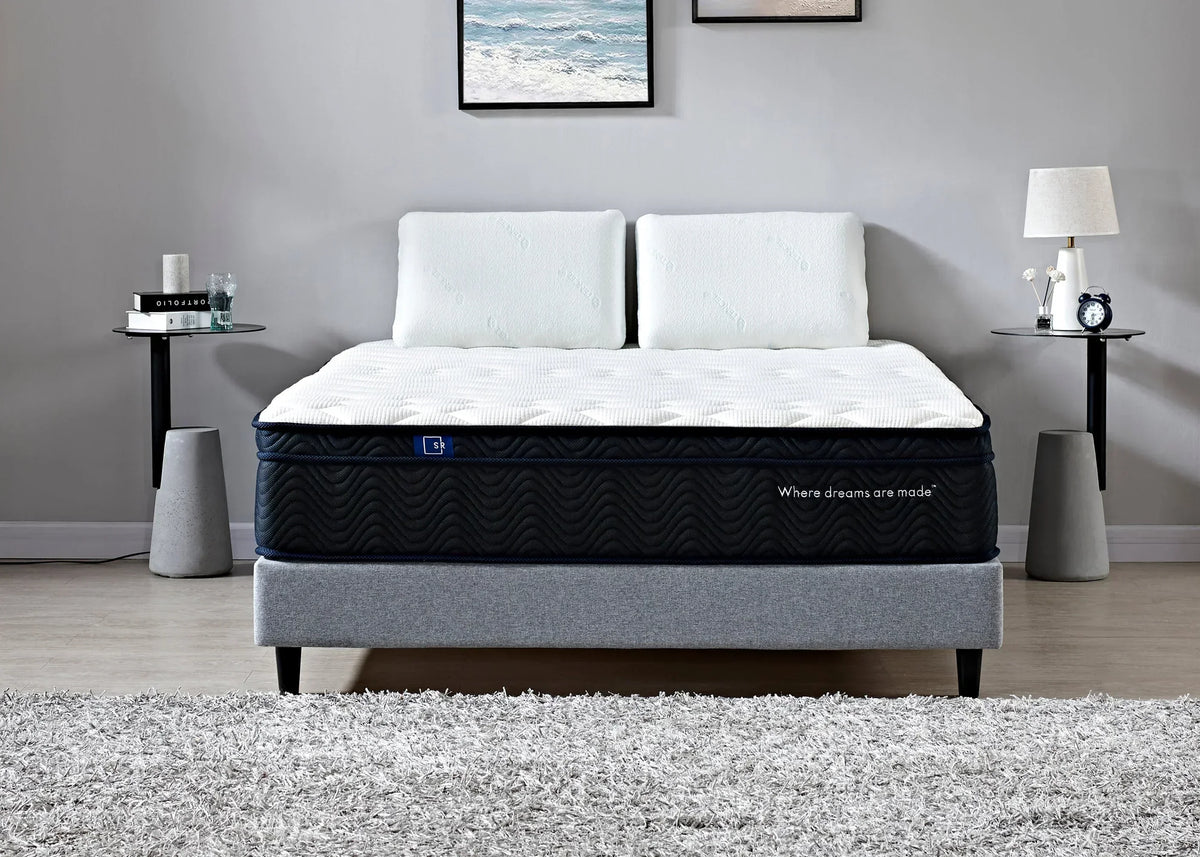
Sleep Republic’s hybrid mattresses are engineered with airflow channels that help keep your sleep surface cooler and drier.
2. Hypoallergenic Materials
Materials like natural latex and high-quality foams are naturally resistant to dust mites, mould, and bacteria. Unlike older mattress materials, they don’t easily trap allergens.
Every Sleep Republic Mattress uses premium materials chosen for hygiene, durability, and comfort.
3. Washable, Protective Barriers
A mattress protector is one of the most effective defences against dust mites. It creates a barrier that prevents allergens from penetrating the mattress core.
Using a mattress protector that is:
- Washable
- Breathable
- Waterproof
- Anti-allergy
allows you to regularly remove allergens and keep your mattress clean.
4. Zoned Support Without Excess Padding
Overly plush mattresses with deep padding layers can trap allergens. A balanced, medium-feel mattress with zoned support provides comfort without unnecessary material buildup.
Sleep Republic’s zoned pocket spring systems support spinal alignment while maintaining a cleaner, more breathable structure.
When It’s Time to Replace Your Mattress
Even with regular cleaning, mattresses eventually accumulate allergens that can’t be fully removed.
You should consider replacing your mattress if:
- It’s more than 7–10 years old
- Allergy symptoms persist despite protectors and cleaning
- The mattress shows signs of sagging or wear
- You wake up with unexplained congestion or irritation
A new mattress designed with allergy sufferers in mind can make a noticeable difference to sleep quality and health.
Extra Tips to Reduce Dust Mites in the Bedroom
Alongside choosing the right mattress:
- Wash bedding weekly in hot water
- Vacuum mattresses and carpets regularly
- Keep bedroom humidity low
- Avoid heavy fabrics that trap dust
- Use washable pillows and protectors
Small changes combined with the right mattress setup can significantly reduce allergen exposure.
Sleep Better with the Right Mattress Solution
Dust mites don’t have to control your sleep. With a breathable hybrid mattress, hypoallergenic materials, and proper protection, allergy sufferers can enjoy deeper, more comfortable rest.
Explore Sleep Republic’s hybrid mattress range and sleep protection essentials to create a cleaner, healthier sleep environment — and wake up feeling refreshed instead of congested.
FAQs
Can dust mites live inside a mattress?
Yes. Mattresses are one of the most common places dust mites live due to warmth, moisture, and skin cells.
Are hybrid mattresses better for allergy sufferers?
Yes. Hybrid mattresses allow better airflow than foam-only designs, helping reduce moisture that dust mites need to survive.
Do mattress protectors really help with dust mites?
Absolutely. A washable mattress protector creates a barrier that prevents dust mites and allergens from entering the mattress.
How often should allergy sufferers replace their mattress?
Every 7–10 years, or sooner if allergy symptoms persist despite regular cleaning and protection.