






Blog

Hybrid Mattresses Explained: What They Are and Why They Work
Choosing the right mattress can feel overwhelming with all the options available today. If you’re looking for comfort and support, hybrid mattresses offer a perfect balance of both. This blog post will explore what hybrid mattresses are, why they work, and how to choose the perfect one for your needs.
Read more
Which Sleep Republic Mattress Is Right for You?
Not sure which mattress is right for you? Take our quick quiz to discover whether the Sleep Republic ES, Original, or LUXE is your perfect sleep match.
Read more
Why Mattress Support Matters More Than You Think
When it comes to achieving a restful night’s sleep, the role of mattress support cannot be overstated. A supportive mattress provides the necessary foundation for your body, ensuring proper spinal alignment and relieving pressure points. 1. Spinal Alignment and Posture One of the key benefits of mattress support is its ability to promote proper spinal alignment. During sleep, your spine should maintain its natural curves, regardless of your sleep position. A supportive mattress helps distribute your body weight evenly, preventing any excessive sinking or sagging that could lead to misalignment. This alignment is crucial for reducing back pain and ensuring restorative sleep. 2. Pressure Point Relief A mattress with adequate support can alleviate pressure on sensitive areas like the shoulders, hips, and lower back. By evenly distributing weight, it minimises stress on these points, reducing the likelihood of discomfort and improving circulation. This is especially beneficial for side sleepers, who often experience pressure buildup in these regions. 3. Enhanced Sleep Quality Proper support contributes to deeper, more restful sleep by minimising tossing and turning. When your body is well supported, you’re less likely to wake up due to discomfort or the need to readjust. This uninterrupted sleep is vital for cognitive function, mood regulation, and overall health. 4. Long-Term Health Benefits Investing in a supportive mattress isn’t just about immediate comfort; it has long-term health implications. Chronic back pain, poor posture, and sleep disorders can often be traced back to inadequate mattress support. By choosing a mattress that maintains proper alignment and support, you’re taking a proactive step toward preventing these issues. 5. The Sleep Republic Difference At Sleep Republic, we understand the critical role of support in sleep health. Our mattresses are engineered with a unique 5-zone support system, designed to provide targeted support to different areas of your body. This ensures that each part of your body receives the appropriate level of support, promoting optimal alignment and comfort throughout the night. Mattress support is a fundamental component of sleep quality and overall health. By ensuring proper spinal alignment, relieving pressure points, and enhancing sleep continuity, a supportive mattress can make a significant difference in your well being. Consider evaluating your current mattress and investing in one that offers the support your body needs for restful, rejuvenating sleep. For more information on how Sleep Republic mattresses can improve your sleep quality, contact our sleep specialists today. Shop the mattress
Read more
How We Built Australia's Best Mattress – And Why It Still Stands the Test of Time
An Inside Look at the Design Process with Our Founder The mattress industry is full of big claims, every brand promises the most comfortable, most supportive, most life changing sleep. But at Sleep Republic, we don’t just make claims—we back them up with science, industry awards, and thousands of five star reviews. So what does it take to design Australia’s best hybrid mattress? And how have we maintained that title for years? We sat down with Sleep Republic founder Mark Ottley to discuss the meticulous design, testing, and innovation behind our award winning hybrid mattress. A Mattress Designed for Sleep, Not Marketing Mark Ottley has been in the mattress industry his entire life. With decades of experience in production, logistics, and customer service, he saw firsthand the confusion consumers faced when choosing a mattress. “Mattresses were missing honesty,” Ottley explains. “It was almost impossible to compare models. Most of the time, mattresses were the same, just wrapped in different fabrics with different names.” That’s when the idea for Sleep Republic was born. Instead of following industry trends, Ottley set out to design a mattress based on what customers actually needed: ✔️ Medium firm support – the ideal balance for most sleepers✔️ Temperature regulation – no overheating during the night✔️ Premium materials – long lasting durability✔️ Minimal partner disturbance – motion isolation for undisturbed sleep Using 30+ years of industry data, the team identified key factors that make or break a great mattress. But the challenge wasn’t just to create a mattress that met all these needs—it was to engineer one that would last more than 10 years. Reinventing the Hybrid Mattress Ottley and his team knew that no single mattress type could deliver everything customers needed. Memory foam offered plush comfort but lacked support. Innerspring mattresses provided support but lacked durability. Other types excelled in some areas but failed in others. So, they built something entirely new. “We started from the ground up,” Ottley says. “We tested every material combination until we found the perfect balance.” The result? The Sleep Republic hybrid mattress, featuring: 🔹 High definition pocket springs for superior support🔹 Gel infused memory foam for cooling comfort🔹 Natural latex for durability and breathability🔹 5 zone support system for spinal alignment🔹 Reinforced edges for increased sleep surface Each component was carefully selected, tested, and refined through over 15 prototypes before the final design was perfected. What’s Inside the Sleep Republic Hybrid Mattress? 🔹 High Definition Pocket Springs: Unmatched Support Most spring mattresses have around 900 coils. The Sleep Republic hybrid mattress has up to 2500, ensuring precision support and less motion transfer. Each steel spring is individually wrapped, creating targeted support for different areas of the body. 🔹 Gel Infused Memory Foam: Comfort Without the Heat Memory foam is known for its pressure relief, but traditional memory foam retains heat. By infusing our memory foam with cooling gel, we created a breathable layer that contours to the body without overheating. 🔹 Natural Latex: Breathability and Resilience To create the perfect balance between softness and support, we incorporated natural latex—a material known for its durability, antimicrobial properties, and responsiveness. Unlike synthetic alternatives, natural latex stays supportive for years. 🔹 5 Zone Support System: Precision Comfort Unlike standard mattresses with only 3 zones, our 5 zone system provides targeted support for the shoulders, back, and hips—areas that need the most pressure relief and alignment. 🔹 Reinforced Edge Support: A Stable Sleep Surface Weak edges are a common complaint with mattresses, but not with Sleep Republic. Our reinforced edge support provides a firm seating area and ensures the mattress holds its shape over time. 12 Years of Testing and Counting A mattress isn’t just about how it feels on day one—it’s about how well it holds up over the years. That’s why every Sleep Republic mattress undergoes rigorous testing, simulating 12 years of use in just a few weeks. ✔️ Durability testing: 36,000 cycles of force applied to simulate a decade of sleep✔️ Edge support testing: Pressure applied to the mattress perimeter to ensure it won’t sag✔️ Material quality control: Every batch of raw materials is checked for consistency and safety “Our customers trust us to provide a mattress that will last,” Ottley says. “That’s why we go the extra mile in quality control.” Why We Keep Innovating At Sleep Republic, we don’t just design mattresses for the sake of selling them. We build them because people deserve better sleep. “There’s no point in designing a mattress that looks cool or has trendy features if it doesn’t actually provide comfort and support,” says Ottley. “Everything we do is for the customer—so they can sleep well for years to come.” And that’s why Sleep Republic continues to be one of Australia’s most awarded mattresses—not because of marketing claims, but because of real innovation, real design, and real results. Ready to Upgrade Your Sleep? If your mattress is past its prime, or you’re simply looking for better sleep in 2025, it’s time to invest in quality. Try the Sleep Republic Hybrid Mattress risk-free for 150 nights. ✅ Recommended by CHOICE 4 years in a row✅ Awarded Best Overall Mattress in a Box 2023, 2024, & 2025 by Bedbuyer✅ Backed by thousands of five star reviews Shop now and experience the difference. Shop the mattress
Read more
Understanding the 5 Zones in Your Sleep Republic Mattress
When it comes to achieving a restful and rejuvenating sleep, the design and construction of your mattress plays a crucial role. At Sleep Republic, we have engineered our mattresses with a unique 5 zone support system to ensure optimal pressure relief and support for every part of your body. In this post, we’ll delve into what these 5 zones mean and why it’s essential to use your mattress correctly to benefit fully from this innovative design. What Are the 5 Zones? Our Sleep Republic mattress is divided into five distinct zones, each designed to cater to specific areas of your body. Here’s a breakdown of each zone and its purpose: Firmer zone under the hips: when sleeping, your body needs extra support in the hip region, because for most people, this is the heaviest part of the body. This zone provides good spinal support as it lifts the hips and ensures the lower lumbar area is in correct alignment. A mattress without adequate support in this zone, can lead to a sore lower back when you wake up in the morning. Softer zone under the shoulders: this zone allows the shoulders to sink into the mattress for good spinal alignment. This zone also provides gentle pressure relief for the shoulders and helps prevent soreness when side sleeping, which helps prevent tossing and turning at night and increases the quality of your sleep. Softer zone under the thighs, knees and calves: this zone helps to ease pressure on the muscles and joints. and 5. Firmer zones under the head and feet: ensures optimum support and spinal alignment for your head, neck and feet. Our Pillowtop/comfort Layer Design: The comfort layer is vital for supporting the body’s pressure points. Our pillowtop/comfort layer features a combination of 3cm of gel-infused memory foam and 3cm of natural latex. It’s just the right thickness. It’s thick enough to provide pressure relief to help prevent tossing and turning at night, and improve your sleep quality, without being so thick that it reduces support under the hip, so it ensures your lower lumbar is still supported correctly. Our pillowtop/comfort layer foam does need to be cared for correctly and we talk about this in our tips below. Why Correct Mattress Orientation Matters To fully benefit from the 5-zone support system, it’s essential to use the mattress in the correct way. Here’s why: Optimal Support and Alignment Each zone is meticulously designed to support a specific part of your body. Using the mattress incorrectly will misalign these zones with your body parts, leading to inadequate support and potential discomfort. A super king mattress is unique in that it is a perfect square, so you might assume it can be used in any direction. It’s important to make sure your mattress is placed in the correct direction on the base, to ensure the zones are in the correct position, otherwise the mattress will feel completely wrong and you won’t be getting the benefits from all the work we’ve put into our mattress design. Prolonged Mattress Lifespan Using the mattress as intended helps in evenly distributing your body weight across the zones. This not only enhances your comfort but also extends the lifespan of the mattress by preventing uneven wear and tear. Enhanced Sleep Quality When the mattress zones align correctly with your body, you experience reduced pressure points, better spinal alignment, and improved overall comfort. This leads to a more restful and uninterrupted sleep. Tips for Correct Mattress Use Ensure the lines on your mattress go from side to side (as opposed to top to bottom). Ensure your mattress is placed on the bed frame with the head and foot sides correctly aligned as per the manufacturer’s instructions. Regularly Rotate Your Mattress: While our mattress is designed to provide lasting support, rotating it top to bottom every few months can help in maintaining even wear and prolonging its lifespan. Foam will naturally contour to the body over time unless it is a very firm foam which is not comfortable for most sleepers. Our mattress is designed to support you correctly while the foam contours to your body and provides pressure relief. However, to help care for your mattress, and ensure the foam is wearing evenly, it’s important to rotate the mattress monthly. Use Appropriate Bedding: Ensure your bedding is suited to your mattress size and correctly placed to avoid any discomfort. At Sleep Republic, we are committed to providing you with the best sleep experience. Understanding and utilising the 5 zone support system correctly will ensure you wake up refreshed, pain free, and ready to take on the day. Shop the mattress
Read more
Sleep Republic Mattress obtains CHOICE recommendation for fourth year in a row!
The quality of the Sleep Republic Mattress was evident again after receiving the recognition from CHOICE as a Recommended Mattress for 2024. CHOICE is a consumer advocacy group from Australia. ¨Formed at a meeting at Sydney Town Hall in September 1959, the Australian Consumers’ Association started out with about 50 members and 50 pounds in the bank. In April 1960, the first edition of CHOICE magazine was sent to 500 subscribers. There was clearly a need – within a year, the magazine had 10,000 subscribers and by the end of the decade, more than 100,000¨(CHOICE). Since then, CHOICE has become a trusted way to learn about Australian made products. What makes Sleep Republic Mattress so special? More pocket springs for more support: The more springs in a mattress, the more support you receive. That’s why we’ve squeezed as many as 2500 springs into one mattress. Sleep-inducing support: Those 2500 springs provide support in 5 specific body zones and for co-sleepers, you won’t even know your partner is there. Increased breathability: Natural latex regulates airflow and body temperature through thousands of ventilation holes. Comfortable contouring: Gel-infused memory foam contours to your body, providing pressure relief. Sweat Repellent: A mattress absorbing sweat can lead to unpleasant odours and deterioration in quality. However, the Sleep Republic mattress excelled in CHOICE’s sweat repellent test, receiving a perfect score. The testers found that it did not retain any fluids, making it the ideal choice for even the sweatiest sleepers. Enjoy a clean and fresh sleep experience with Sleep Republic. Tested for ensure comfort: The Sleep Republic mattress underwent rigorous comfort retention tests. After subjecting the mattress to wear and tear equivalent to years of use, it demonstrated outstanding results in maintaining comfort. Regardless of body type or shape, both male and female testers reported a high level of comfort, validating Sleep Republic’s commitment to ensuring exceptional sleep quality. One of the most interesting facts is that comes packed in a box! Easy to transport when moving is a bonus of this amazing product. Shop our range of Hybrid Mattresses.
Read more
Celebrating Three Years of Excellence: Sleep Republic Wins Best Mattress 2024 in a Box Award by BedBuyer
Best Mattress Australia? Sleep Republic Best Mattress in a Box 2024 Celebrating Three Years of Excellence: Sleep Republic is proud to announce its victory as the Best Mattress in a Box for 2024, awarded by BedBuyer. This prestigious recognition solidifies Sleep Republic’s commitment to providing the finest sleep experience in Australia. Discover why Sleep Republic is the best mattress in Australia and experience superior comfort and support for a restful night’s sleep. The Full Package of Best Mattress Australia: At Sleep Republic, we believe in offering more than just a mattress—we provide the full package. Our comprehensive approach to customer satisfaction sets us apart from the competition, ensuring that every aspect of the Sleep Republic experience exceeds expectations. Awarded by BedBuyer: Winning the Best Mattress Australia in a Box Award by BedBuyer for three consecutive years is a testament to the superior quality and unmatched comfort of Sleep Republic mattresses. This prestigious recognition reaffirms our position as a leader in the industry and motivates us to strive for even greater heights. Recommended by Choice: In addition to our accolades from BedBuyer, Sleep Republic has been recommended by Choice for three years in a row. This endorsement further validates the exceptional value and performance of our mattresses, solidifying our reputation as a trusted choice for discerning customers. Endorsement by Australian Spinal Research Foundation: We are honored to have earned the endorsement of the Australian Spinal Research Foundation, highlighting our commitment to promoting spinal health and ergonomic design. This prestigious endorsement underscores the importance of choosing a mattress that prioritizes both comfort and support. Comprehensive Package: What truly sets Sleep Republic apart is our commitment to providing a comprehensive package that goes above and beyond the industry standard. Unlike our competitors, we believe that a mattress purchase should be a hassle-free and rewarding experience from start to finish. That’s why we offer: Free Nationwide Shipping: Unlike our competitors, who may charge hidden fees or exclude certain regions from free shipping, we provide free delivery everywhere in Australia. Every customer, regardless of location, enjoys doorstep delivery without exceptions or additional costs. 12-Year Warranty: Our industry-leading 12-year warranty is a testament to the durability and longevity of Best Mattress Australia – Sleep Republic mattresses. While other brands may offer shorter warranties or limited coverage, we stand behind our products and ensure that our customers receive lasting value and peace of mind. Australian Customer Service: While most of our competitors outsource customer service or rely on automated systems, Sleep Republic takes pride in offering dedicated Australian-based customer service. Our team is readily available to provide prompt and personalized assistance, ensuring that every customer receives the support they deserve. Free Returns: Unlike our competitors, if you live in a rural area, we don’t ask you to bring your mattress to the nearest capital city for returns. Instead, we will pick it up ourselves or arrange for Salvos to collect it from you, ensuring a hassle-free return process. Plus, our return process for Best Mattress Australia is the easiest – you don’t need to call or email with an explanation. Simply fill out our return form online and voila! We will contact you to initiate the return process. Top Quality Materials only in Best Mattress Australia: We use only the finest materials in crafting our mattresses, ensuring unparalleled comfort and durability. Our customers consistently rave about the quality and comfort of Sleep Republic mattresses, further solidifying our reputation as a top choice in the industry. With Sleep Republic – Best Mattress Australia, you’re not just purchasing a mattress—you’re investing in a premium sleep experience that prioritizes comfort, support, and customer satisfaction. Join us in celebrating three years of excellence and discover why Sleep Republic is the top choice for discerning customers nationwide.
Read more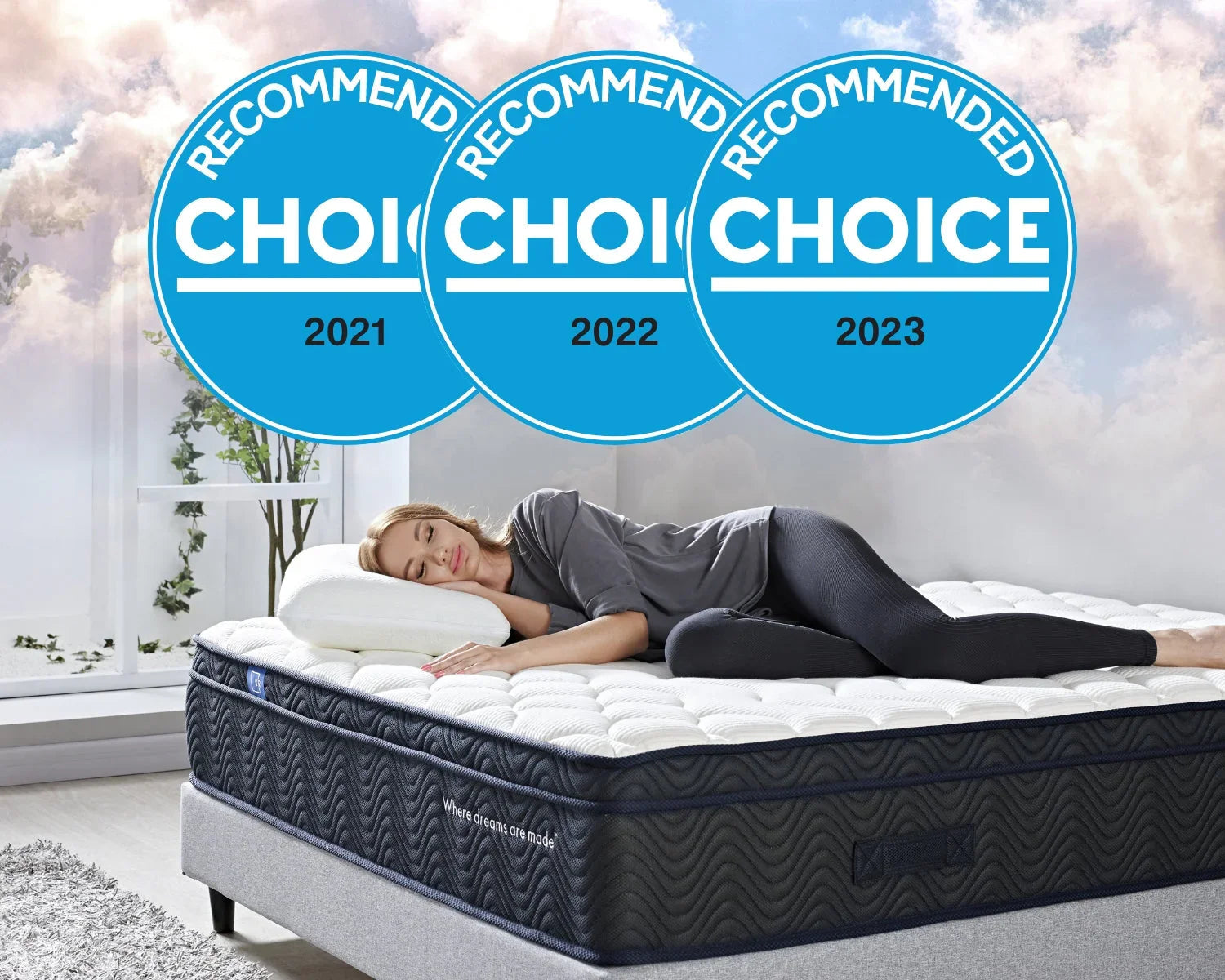
Sleep Republic: The only mattress in Australia to be CHOICE recommended 3 years in a row!
In an exciting announcement, Sleep Republic has been named CHOICE recommended for the third year in a row, making it the only mattress in Australia to achieve this distinction. CHOICE, trusted by millions of Australians, operates under the Australian Consumers’ Association and utilises a rigorous testing methodology for evaluating mattresses. This recognition comes on the heels of Sleep Republic receiving the Best Overall mattress in a box accolade from Bedbuyer for three consecutive years. Let’s dive into some of the key features that impressed CHOICE and learn why Sleep Republic is receiving widespread praise from independent experts. Resistance to Sagging: One of the most common issues with mattresses is sagging over time. CHOICE employs a cask-shaped roller to simulate eight years of use, measuring the mattress’s height and firmness before and after the test. Sleep Republic’s mattress scored nearly perfectly, assuring buyers of long-lasting support and cushioning night after night. Sweat Repellent: A mattress absorbing sweat can lead to unpleasant odors and deterioration in quality. However, the Sleep Republic mattress excelled in CHOICE’s sweat repellent test, receiving a perfect score. The testers found that it did not retain any fluids, making it the ideal choice for even the sweatiest sleepers. Enjoy a clean and fresh sleep experience with Sleep Republic. Easy Transport: Sleep Republic’s mattress in a box is not only comfortable and durable, but it’s also incredibly convenient to move. CHOICE testers noted that the mattress box comes with wheels, making transportation hassle-free. This thoughtful feature is just one example of the attention to detail that sets Sleep Republic apart from the rest. Exceptional Comfort Retention: In addition to its resistance to sagging, the Sleep Republic mattress underwent rigorous comfort retention tests. After subjecting the mattress to wear and tear equivalent to years of use, it demonstrated outstanding results in maintaining comfort. Regardless of body type or shape, both male and female testers reported a high level of comfort, validating Sleep Republic’s commitment to ensuring exceptional sleep quality. With CHOICE and Bedbuyer recognising Sleep Republic as one of the best pocket spring mattresses available in Australia, backed by positive reviews from independent experts, it’s no wonder why Sleep Republic has become a favourite among mattress buyers. If you’re ready to experience the extraordinary features and benefits offered by the Sleep Republic mattress, take advantage of the 100-night free trial, with a full refund available if you’re not completely satisfied. Start sleeping better today by discovering more about this outstanding mattress. Shop the mattress
Read more
Discover the Best Method for Combining Two Single Mattresses
Combining two single mattresses is a practical way to create a larger bed without buying a new one. Learn how to join two single mattresses together securely, ensuring comfort, support, and long-term durability with expert tips from Sleep Republic.
Read more
I Work for a Mattress Company and I'm a Mum of Two: This Is the Mattress I Recommend for Your Young Kids
Choosing the Best Mattress for Your Child It’s a question we get asked daily, “Should I get the Sleep Republic Mattress or the Sleep Republic Kids Mattress for my child?”. The parents that ask usually have a kid two years old or just under, and they are looking for their son or daughter’s first “Big Kid Bed”. The reason why these parents are asking? Because, at this stage in life, they know they will also be spending a lot of time in that bed. Trust me, I have been there too. Countless middle of the night wake ups and they can’t be rocked/patted/sung back to sleep, into their bed we go. Other Brands vs The Sleep Republic Kids Mattress First up, let’s compare the Sleep Republic Kids Mattress to other kids mattress brands. Yes I work for this company, so obviously I am biased towards our product, BUT as a sleep deprived mother of young children, I would sell my soul for a comfortable sleep, so I think you can trust me. My eldest daughter Amelia’s first mattress was a different brand but designed for kids, and it was comfortable and supportive enough for her, but my husband and I found we could feel the springs when we were on it ourselves. If it were a particularly bad night- think sickness or teething- we would be in a significant amount of discomfort by morning. It was definitely a mattress designed specifically for kids. As with most areas of parenting, we learned from our mistakes and made more educated decisions with our second daughter, Lucy. While she was still in her cot, we got a Sleep Republic Kids Mattress for her room. That way if she woke in the night, instead of having to sit up uncomfortably in the nursing chair, we could cuddle her back to sleep in the bed. Total game changer. I think I’ve logged about 50,000 hours (don’t check my maths please) in Lucy’s room, trying to get her back to sleep. Getting a mattress that is designed for kids but comfortable and supportive enough for adults is probably the best decision I’ve ever made in my entire life. Okay slight exaggeration, but honestly after 20 bouts of gastro, the flu, covid, and every other daycare disease Lucy brought home, I swear I was in her room at night more than my own over winter. Having a supportive mattress that I could comfortably lay on with her saved my back and my sanity. The Original Sleep Republic Mattress vs The Sleep Republic Kids Mattress My husband and I have been sleeping on the original Sleep Republic Mattress since 2016. I love how the mattress designer was able to perfectly blend the firm, supportive springs in with the soft and luxurious cashmere top. It really does somehow feel soft and firm at the same time. That being said, you would think I would recommend the original mattress for your kids if you do a lot of co-sleeping right? Wrong! While they are small, young children have an amazing way of causing you more pain than a full grown adult. Sharing a bed with a kid can be one of the most physically uncomfortable situations of your life. Their elbows, knees and feet all end up in your stomach and back, they headbutt you, push you, and pull you all night long (but they really are such a blessing!). Thanks to their middle of the night ninja-like moves, I believe the firmer, extra supportive Kids Mattress is actually more comfortable for adults that need to co-sleep. Since your child’s mattress is usually a smaller size than your own, you probably feel like you need to hold on for dear life to keep from rolling off, right? Well the Kids Mattress has an amazingly strong and supportive edge support that does great job of locking you in. The medium firm feel of the original mattress is perfect for your actual bed when you will be sleeping in your normal, comfortable positions. For the times you will be wrestling a crocodile and dodging UFC kicks, the firm feel of the Kids Mattress and extra firmness of the edge support is welcomed with open arms. The Sleep Republic Kids Mattress is designed specifically for this stage of life. It is made from the same premium materials you will find in the Sleep Republic Mattress, but is tailored to the unique needs of growing bodies. The mattress is just the right firmness to support the development of their spine, while the layers of plush, breathable comfort foams provide the contouring comfort they need to move, sleep and grow. It is also engineered to last, so you can be sure your little one will be sleeping soundly for years to come. Now remember that while the days go slow, the years go by fast with young kids, and before you know it you will be back to spending your nights in your own bed. I’m very much looking forward to the time when I can return to a full 8 hours enjoying the 2,250 springs and cashmere knitted fabric in my own mattress (sigh). But until that day comes, I will be okay with getting my 2am cuddles on my daughter’s Kids Mattress, knowing that both she and I will be comfortable and supported all night long. Shop the Kids Mattress
Read more
How to remove pet urine stains from a mattress
Learn the tricks the experts use to remove pet stains from your bedding If you have a fur baby or cohabitate with a feline roomie, you know accidents can happen. But don’t worry because we’ve compiled the best DIY methods for removing cat and dog pee stains and lingering odours from your mattress and bedding. Let’s start with the facts first. What are pet urine stains? Pet urine stains are those pesky little yellow-brown spots on mattresses that are usually caused by the accumulation of pet urine over time. They can form from either direct contact with your pet’s urine or from droplets landing on the mattress and evaporating, leaving behind minerals and salts that can eventually leave a permanent mark. It’s important to remember that these stains aren’t just aesthetically displeasing; they can also be sources of bad odours and potentially hazardous bacteria and germs. What makes our furry friends have accidents indoors? Dog and cat pee stains can be frustrating, and it’s important to understand the root causes of why our furry friends have accidents indoors and in our beds to try and prevent them in the future. Medical Causes Urinary tract infections or medical conditions such as diabetes, kidney diseases or bladder stones can make it difficult for pets to control their bladders. Behavioural In some cases, behavioural issues like lack of house training, fear and anxiety, or simply not having access to an appropriate place to go could cause your pet to have accidents inside. Marking Territory Pets may also urinate in inappropriate places due to marking territory, and it can be difficult to unlearn this primal behaviour. It’s important to remember that many factors may lead pets to have accidents indoors – but with the right effort (and maybe a few accidents along the way!), you’ll eventually see an end to unsightly pet urine stains! What makes pet stains so hard to remove from bedding? Pet stains are notoriously difficult to remove from mattresses and bedding. Pet urine comprises compounds and proteins that make complete stain removal a real challenge. Proteins One of the causes for their stubbornness is that pet urine contains proteins that are absorbed deep into the mattress fibres. This means that even if you manage to physically remove the stain, it will often still remain within the mattress. It is not enough to merely soak up the urine; you must take action to break down and remove these proteins. These proteins can also become embedded in the mattress over time from multiple instances of urine contact, creating an even more stubborn stain that is harder to remove. Uric Acid & Urea In addition, pet pee contains both urea and uric acid, which create a sticky residue that adheres to fabric fibres. Uric acid is particularly difficult to get rid of once it bonds with fabrics due to its high acidity level and ability to crystallise when exposed to air, making it almost impossible for regular cleaning solutions or laundry detergents alone to remove them effectively. Pet Hair On top of that, pet hair can easily get mixed in with pet urine stains, further complicating the removal process. As pet hair contains natural oils, they can be left behind in the fabric, even when washed or vacuumed away. These oils can attract dirt and debris, ultimately leading to a darker and more noticeable stain. Pet hair can also cause mattresses and other textiles to wear out quicker as they ‘grab’ at fibres during vacuuming or washing cycles. Umm, we love our four-legged friends, but … “Ewww!” Mattress Protectors protect against stains The Sleep Republic team highly recommends using a mattress protector to protect your investment from pet urine stains and other accidents. Our soft Tencel mattress protectors provide optimum waterproofing protection and a cool and silky feel to your mattress. Expert Tips on Removing Pet Urine Stains The key to removing pet urine stains is to act quickly! The longer you wait, the more likely it is for the stain to set in and become more difficult (or even impossible) to remove. One of the best ways to get cat or dog urine stains out of a mattress is with a cleaner specifically designed for this purpose. Commercial Pet Urine Cleaners These cleaners are typically enzyme-based solutions that work by breaking down proteins in pet urine, which makes them easier to remove from fabric surfaces. Be sure to read the directions carefully before using any type of enzyme cleaner, as many products have specific instructions, such as dilution ratios or rinsing requirements. Household Cleaning Solution Aside from using speciality cleaners, you can try several additional methods to remove pet urine stains from your mattress. For example, applying an absorbent cloth directly onto the stain and pressing down gently until no more liquid is absorbed may help eliminate some of the stain’s discolouration and odour. Additionally, some people suggest creating a paste composed of household cleaning items such as baking soda, bleach, laundry detergent or vinegar* in order to scrub away any remaining residue. Always use caution when attempting this method, as too much scrubbing could damage delicate fabrics or fibres in your mattress. *Disclaimer: We do not recommend using these items together as combining bleach and vinegar can create a toxic gas. It is also important to remember that most household cleaners may not treat pet urine stains effectively because they aren’t designed to break down proteins like most speciality pet urine enzyme cleaners. How To Get Cat Urine Stain Out of Mattress (Works for dogs too!) There are several ways you can try to remove urine from a mattress. Choose the method that suits you best or based on what you have around the house. These methods may be used on latex, pocket spring, hybrid or memory foam mattress but please see the manufacturer’s care instructions for guidance on how to best clean your mattress materials, as they may be affected by the cleaning solutions mentioned below. Baking Soda & Vinegar Solution Cleaning Method Fill a clean spray bottle with one cup of distilled white vinegar, one cup of water, and 2 teaspoons of baking soda. Shake to mix thoroughly, then spray onto the stain. Let sit for several minutes before blotting dry with towels. Hydrogen Peroxide Cleaning Method A hydrogen peroxide solution is the best method for removing fresh urine stains. Combine 4 tablespoons of hydrogen peroxide, 2 tablespoons of warm water, and several drops of dish soap in a spray bottle. Spray the solution on the stain and repeat as necessary. Lightly rinse the area with water once you’re finished, dry it with paper towels, and then vacuum up any leftover moisture. Laundry Detergent Cleaning Method Soak up any excess moisture with a clean cloth or sponge. Next, apply a small amount of liquid detergent to the area and massage it gently. Leave it for two minutes before rinsing it with cool water and blotting it dry again. Odours – How to rid your home of a stubborn urine smell While you may have removed the offending stain, sometimes a lingering pee smell can remain. To eliminate this smell, we recommend the following DIY home remedy: Start with a 1/4 cup of baking soda. Spread a thin layer of baking soda evenly across the damp spot. Let it sit there overnight, then vacuum thoroughly until the area feels clean to the touch and all of the powder is gone. You may have to go over it a few times. Cleaning Premium Quality Mattresses If your mattress has a manufacturer’s tag indicating it should only be cleaned with water or other mild detergents, this is your best bet for cleaning the area without damaging it further. Certainly, the Sleep Republic mattress should not be cleaned with anything other than careful wiping or dabbing with a damp cloth. We recommend against using solvents or chemicals and warn against getting the mattress overly wet. Let the mattress air dry completely before covering again. Want to climb into a fresh, clean bed? Well, now you have all the tricks of the trade on the best way to try and remove urine stains from your mattress and bedding. But, if you’ve decided that there’s too much damage to clean your mattress thoroughly, or if it was on its last legs anyway, check out our multi-award-winning hybrid mattress in a box and see what you could be sleeping on … this week! Our expedited delivery service means you could be drifting off in clean, fresh and blissful comfort in just a few days. Plus, with our 100-Night Trial, you can experience all the comfort and support of our mattress at home, and if you find it’s not a good match for you, we’ll arrange to pick it up and issue a full refund.
Read more
The best ways to remove urine stains and smells from your mattress
With our handy guide, you’ll know exactly what you need and what to do when the inevitable wee accident happens. Every parent fears it: the 3 am ‘uh oh’ of a sopping wet toddler at the foot of the bed informing you they’ve wet the bed and demanding to be changed. Of course, the experience isn’t unique to parents. Pet owners who love to snuggle their dogs and cats know the feeling well. Honestly, many adults do, too. There’s no shame in bedwetting accidents — they are accidents, after all. The only thing to do is act quickly. You’ll need to know what you need and what steps to take, and that is precisely what this guide aims to teach you. In this guide, you’ll learn: Household essentials to keep stocked in case of bedwetting How to clean fresh urine from your mattress How to remove soaked-in urine stains from your mattress How to get rid of lingering pee smells in your mattress How to clean potent pet pee from your mattress How to prepare for future pee accidents Household essentials for getting wee out of a mattress Preparing for bed-wetting accidents is quite easy. The materials you’ll need are all widely-available household items that you can pick up from your local grocery store, if you don’t already have them. Cleaning essentials for urine-soaked mattresses: Baking soda Clean towels Cold water Enzyme cleaner Essential oils Hydrogen peroxide Kitchen paper Laundry detergent Pet repellant (we’ll give you our natural, non-toxic DIY recipe) Plastic wrap Spray bottle Vacuum (a handheld vacuum would be perfect) White vinegar Many of these essentials have other household uses and will have their own home in your house. But, if bedwetting is a regular occurrence in your household, we’d suggest creating a small ‘accident management’ station where you can quickly grab what you need. Your child’s just had an accident: how to clean wee from your mattress in 5 steps The accident has just occurred, the bed is still wet and the pee is still warm. There’s no time to lose. Quick! Grab the essentials: Baking soda Clean towels Cold water Kitchen paper Laundry detergent Spray bottle Vacuum White vinegar 1. Strip the bed As quick as possible, get your wet bedding into the washing machine. The longer the urine sits, the deeper it stains. A cup of white vinegar in the wash will help break down the still-weak stains and smells. 2. Blot the wet mattress with a dry towel Spread the dry towel over the wet area of the mattress. Gently pat it down and let it soak up as much urine as possible. Once the towel’s laden, repeat the process with a fresh towel if you can spare one. Squares of kitchen paper will do the trick, too. Do not press the towels and paper down, and do not scrub at the mattress — you’ll risk pushing the pee even deeper into the mattress core. 3. Spray the pee-soaked area with a white vinegar solution Fill the spray bottle with ⅓ white vinegar, then dilute it with ⅔ cold water. Give the wet area a generous spritzing, and let it soak in for 10 minutes. Then, dab the area with kitchen paper and soak up the excess solution. White vinegar breaks down the uric acid in the urine, making the wee easier to remove. 4. Sprinkle the urine with baking soda Lay it on thick, especially in areas you think the pee has really worked its way into the mattress. The baking soda will need to sit for 8 hours or so to do its work. Hopefully, most of that time will be overnight. Baking soda is used to clean urine for 2 reasons. The first is that baking soda is alkaline, and neutralises acidic pee to stop it from staining and stinking. The second is that it absorbs moisture very well, so it will draw out pee that’s soaked deep into the mattress. 5. Vacuum the soiled baking soda By the next day, the baking soda should’ve absorbed any remaining pee in the mattress. All that’s left to do is remove it. The easiest way is with a vacuum. We’ll leave it to you to decide which attachment is best, but personal experience has taught us a handheld vacuum makes the job much easier. You should now have a dry mattress, ready to be made up and slept on once again. Any minute traces of uring left in the fabric will have been neutralised by the white vinegar and baking soda. If you’re still getting a pungent smell, or reckon another round of treatment could fade the stains even better, repeat steps 3 to 5 again. If the wee’s already soaked in, here’s how to remove stains from your wee-soaked mattress in 5 steps You weren’t able to get to the accident on time, and now the urine’s soaked deep into the entire mattress. The stains have dried and the smell curdles your blood. The war is not yet lost. There is still hope. But be prepared — removing dark stains from a mattress is a time-intensive process, so you may need to do up the guest bed or the couch while we work on the mattress stains. Quick! Grab the essentials: Clean towels Cold water Hydrogen peroxide (you’ll find bottles at any major supermarket) Laundry detergent Plastic wrap Spray bottle White vinegar 1. Spray the urine stains with a heavy-duty solution We’ll need to create a stronger solution to weaken the dried stain. Fill your spray bottle 2 parts hydrogen peroxide to 2 parts cold water. 2-3 tablespoons of baking soda and a few drops of laundry detergent. Soak the wee stains with your new solution. The deeper and darker the stains, the more solution you’ll need, so don’t be stingy. Don’t scrub or rub at the stains — just let the solution do all the work. 2. Let the mattress soak for a day Cover the wet solution in plastic wrap. This will stop it from evaporating so that it can erode the urine stains for longer. Leave the solution to work for 12-24 hours. You may notice a layer of baking soda residue — don’t worry about that. 3. Let the solution completely dry After a day or so has passed, remove the plastic and let any remaining solution evaporate. This may take a few hours, or it may need to be left overnight. Check it regularly to make sure it’s thoroughly dry. 4. Pee stains still there? Repeat the process. You should see a significant improvement, but don’t be too upset if a particularly dark urine stain remains. Do another round of overnight soaking with your new heavier cleaning solution. Do as many rounds as you can spare the time to, till you’re happy with the state of your mattress. 5. A final clean with water With the pee stains (and pee smell) gone, you’re ready to put your mattress back to use. All it needs now is a spot clean with a bit of water and some paper towels or a dry cloth. As before, make sure you dab gently at any stain remover residue, so you don’t smear it into the mattress. The ghost of accidents passed: how to get rid of the smell of urine on your mattress in 3 steps You might find an acidic pee smell continues to linger even though you thought you removed all the urine from a mattress. Fortunately, getting rid of that nasty urine smell isn’t difficult at all. Quick! Grab the essentials: Baking soda Vacuum 1. Sprinkle baking soda over the entire mattress The beauty of baking soda is that it doesn’t just mask odours — it absorbs them. You may need a fair bit of baking soda to fully cover the affected area. We strongly suggest dusting the entire top surface of your mattress to make sure you totally get rid of any urine smell. 2. Wait a few hours The baking soda will need around 10 hours to absorb all the urine smell. You can either leave the process to work overnight, or you can do it first thing in the morning so that the mattress is ready by bedtime. 3. Vacuum up the baking soda Use a handheld vacuum to suck up all the baking soda. If the urine smell still lingers, repeat the process. Easy. Fur babies are babies too: getting pet wee out of your mattress in 3 steps (plus 3 cleaning tips) Dog pee, cat pee, hamster pee… It doesn’t matter where in the animal kingdom your best friend hails from, pet pee stains and smells far worse than human urine. That’s because pet urine contains more concentrated levels of ammonia, carbohydrates and acid. We’ll have to adjust our cleaning method accordingly. Quick! Grab the essentials: Baking soda Enzyme cleaner Essential oil (optional, any kind) Vacuum White vinegar 1. Cover the stain in baking soda Cover your mattress with baking soda while the fresh urine is still soaking in. Don’t worry about soaking up excess moisture with paper towels. Leave the baking soda for 5 to 10 hours to absorb the pet wee as well as its odour. 2. Vacuum the soiled baking powder and add a fresh layer Baking soda yellows as it absorbs urine from a mattress. Once it is fully darkened, you can vacuum it up. To fully clean urine from your mattress, continue adding fresh layers until the baking soda stays white. 3. Do a final clean with a few towels If there’s any remaining residue, gently wipe it away with a paper towel. If you notice any dampness, spread clean dry towel over the area and leave it for an hour to absorb as much moisture as possible. 3 tips for cleaning pet urine from your mattress 1. Use enzyme cleaners When baking soda isn’t enough, you may need to turn to a strong enzyme cleaning solution. These cleaners create chemical reactions that break down the concentrated chemicals in pet pee. As with everything these days, you’ll almost certainly be able to order a quality enzyme cleaner online. We would recommend visiting a pet shop though — they will be able to guide you to the right cleaner for your particular pet. 2. Avoid toxic cleaners and chemicals Pets are far more sensitive to harsh chemicals than we are, so it’s important to avoid toxic cleaners like hydrogen peroxide, even when highly diluted. Check all of your products for toxicity labels, and strongly consider getting advice from the specialists at your nearest pet shop. 3. Use pet repellant to prevent them from peeing on your bed (or furniture) By misting pet repellant over your bed, furniture or in any area you need your pets to avoid, you might be able to stop them from relieving themselves where they shouldn’t. Our recipe for non-toxic, all-natural pet repellant: 1 cup of cold water 1 cup of white vinegar 10 to 20 drops of essential oil (lemon, orange and eucalyptus are best) Accidents will happen, but here’s how to prevent future wee stains and odours There’s a limit to how many times you can effectively clean the pee out of a mattress, and that’s not to mention any other types of spills and stains. The best way to avoid having to buy a brand-new mattress is to get yourself a quality mattress protector. If you’re expecting regular accidents (from children or pets), you might consider investing in a waterproof mattress protector. With quick action, you may be able to strip the wee-soaked protector and sheets off of the bed before you get a urine stain. That’ll make the job as easy as throwing the sheets in the wash. The best treatment is prevention. So, if you want to avoid the hassle of cleaning your kids’ urine from a mattress or the lingering odour of cat pee, we have a waterproof and super soft mattress protector that’ll save your sanity on those hectic nights. If the above tips and tricks weren’t enough to save your little one’s mattress, perhaps it’s time for a new one, shop our kids’ mattresses here.
Read more
Kids Range Announcement
Sleep Republic’s Multi-Award Winning Mattress Now Available in Kids’ Sizes! Melbourne mattress company, Sleep Republic, is excited to announce the launch of its new kids’ mattress range in 2022. The multi-award-winning company has been busy developing a mattress specifically designed for kids, so everyone can get a good night’s sleep. Boasting natural, certified non-toxic materials, the Sleep Republic Kids Mattress provides maximum comfort and support to help children fall asleep quickly and stay asleep. Designed in Braybrook, Victoria, for the Australian climate, it utilises cutting-edge materials to keep kids cool and comfortable. The Sleep Republic Kids Mattress has been created to support children’s healthy development and well-being. A hybrid pocket spring design, it features the same innovative construction that’s helped Sleep Republic become a multi-award winner. Awarded BedBuyer’s Best Mattress in a Box in 2021 and 2022 ahead of over 160 other brands, the design has also received multiple industry awards and accreditations. The team at Sleep Republic know kids do much more than just sleep on their mattresses. (They were kids too once, after all!) The strong hybrid pocket-spring design is robust enough to withstand anything the family ‘wild child’ can throw at it. And the best part? The Sleep Republic Kids Mattress will still bounce back to provide optimal support for years to come. It’s even backed by a solid ten-year warranty. A pillar of the mattress manufacturing industry in Australia and a man passionate about all things ‘sleep’, CEO Mark Ottley says, “We couldn’t ignore the fact that while adults were enjoying the benefits of quality sleep on a high-performance hybrid mattress – their kids were still sleeping on inferior mattresses. With kids’ sleep being so important to health and well-being, we knew we needed to design a mattress specifically for growing children to help Australian families get the sleep they need. Innovation runs deep at Sleep Republic. Not content with just producing a new kids’ mattress range in 2022 – they’ve also expanded their payment options! You can now use AfterPay, OpenPay, SplitIt and cryptocurrency, to name just a few, and purchase your mattress in interest-free instalments. In fact, Sleep Republic offer the largest range of payment and financing options in the online mattress marketplace. With prices starting at just $749 and free next-day delivery available in metro areas, this game-changing mattress is also very affordable. Are all mattresses created equal? Wake up and smell the coffee, parents! If your kid is getting poor-quality sleep, they may as well not be sleeping. Research suggests that children experience the same poor health from poor-quality sleep as sleep deprivation. Poor mental health in children has also been tied to poor quality sleep. While other factors, such as irregular sleep routines and using electronic devices before bed, can contribute to a bad night’s sleep, a cheap mattress will only compound the problem. Children who have trouble falling or staying asleep may experience side effects such as anxiety, depression, fatigue or anger. Give them a great, high-quality mattress, and you’re giving your child a great start to life. The Sleep Republic Kids range makes falling asleep and staying asleep far easier and offers kids aged 2–15 the quality sleep they need for healthy growth, active learning and healthy development. Sleep Republic’s new Kids’ Mattress range is now available to purchase online at Sleep Republic.
Read more