






Blog
Why Does My Child's Mattress Need a Mattress Protector?
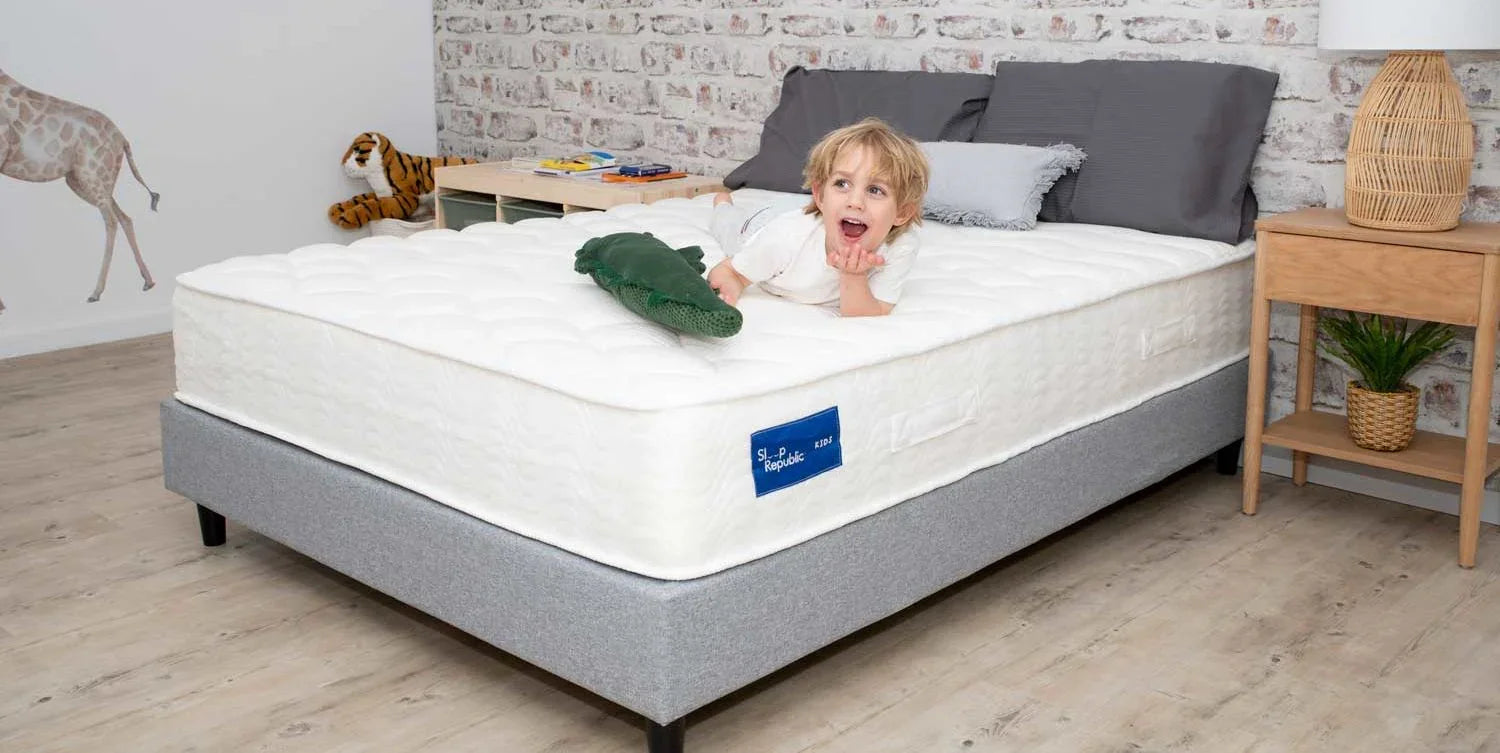
We strongly recommend always using a mattress protector with any mattress, but a mattress protector on a child’s mattress is crucial. Using a mattress protector on a child’s mattress is more hygienic and will result in improved durability and hygiene of the mattress. Mattress protectors do just that — they protect your mattress. They also protect against allergens and irritants like dust mites, mould, bed bugs, and dead skin. Why does my child’s mattress need a mattress protector? 1. They protect your investment We don’t need to tell you that a quality kids mattress isn’t cheap. So really, a mattress protector is designed to ensure your child’s mattress lasts at least 7 – 10 years as it should. Most mattress protectors are water-resistant, which helps avoid stains and odours which will likely void a mattress warranty. 2. They improve your child’s hygiene and prevent allergies Our kids (hopefully!) spend least 8 – 10 hours a day in their beds, sometimes even more. So, it’s essential to keep their mattresses clean and hygienic. Critters like bed bugs and silverfish can hide in your child’s mattress, and pathogens that cause allergies can soak into your child’s bed. But a mattress protector provides another layer of defence. 3. They prevent bad odours and stains Chances are if you’re a parent, you’ve either had to toilet train or care for your child while they’re unwell. You know what kind of smells and stains vomit and urine can produce, and best if they don’t come into contact with your child’s mattress. Instead of having to clean your whole mattress when there’s an accident, just chuck your protector in the wash. Done. 4. They improve your child’s sleep all year round From staying warm to keeping cool, mattress protectors keep your child comfortable in all seasons. Does your child sweat a lot in the summer? A mattress protector stops that sweat from reaching and being trapped in your child’s mattress. In the winter, your child’s mattress protector will give you that extra warmth beneath the sheets. Which mattress protectors are waterproof? Most mattress protectors are waterproof, and specifically, cotton blends are known to be suitable for water resistance. If you’re looking for a waterproof mattress protector, you’ll want a fabric that absorbs moisture and blocks liquid from passing through to your mattress. 1. Pick a mattress protector that fits the size of your child’s mattress.2. Consider thickness and material as you don’t want to change how your child’s mattress feels.3. Get a mattress protector with anti-allergy protection, waterproofing and temperature control.4. Consider how you’re going to wash your child’s mattress protector and what’s easiest for you. We’ll save you some time and point you in the right direction. Our Tencel Mattress Protector is perfect for your child’s bed as it is breathable, silent & waterproof, hypoallergenic: ideal for severe allergy and asthma, machine washable and comes with a 10 Year Stain Proof Guarantee when purchased with any of our mattresses. How many mattress protectors do I need for my child’s bed? As parents of small children we say at least two- trust us! Have you ever had to get up in the middle of the night with a sick or toilet training kid? If you have – you know why you’ll need two! Imagine having to get up in the middle of the night, care for your sick or toilet training child AND have to clean their bed at the same time. No thank you. With two mattress protectors you can strip the bed, chuck the soiled linens and protector in the wash, remake the bed with your spare set and you are good to go. Pro tip: Layer your child’s bed with two protectors and sheet sets at the same time. So it would go in this order: mattress, protector, sheets, 2nd protector, 2nd set of sheets. This way if there’s a middle of the night accident you can just strip off the top layer and not have to worry about making the bed again, it’s already done! You can thank us next time when you’re not having to make the bed at 2am! Lucky for you we’ve created the Kids Protector Bundle which includes the Sleep Republic Kids Mattress and 2 Tencel Mattress Protectors, bundled together for 15% off. Shop the Kids Protector Bundle
Read more
How long does it take to adjust to a new mattress?
So you finally decided to ditch the old mattress and invest in a new one. First of all, congratulations are in order, because you’re about to experience a whole new level of good sleep. Surprisingly, many people aren’t aware that poor sleep is often the result of a bad mattress. You, my friend, have just invested your money very wisely. The team at Sleep Republic have been in the mattress industry for 20 years and can confidently split new mattress customers into one of two groups- the ones that can comfortably sleep on their new mattress from day one, and the ones who require a brief adjustment period. If you’re in the first group, well done! What are you doing here, go back to sleep! If you are in the second group, keep reading, we have some great information for you. Did you know it takes on average three weeks to get used to a new mattress? It can take anywhere from 3 days up to 6 weeks to get used to the feel of a new mattress. This is less about the mattress itself, and more due to the body needing time to get used to the new feel. You know when you get a new pair of shoes, they can be uncomfortable for the first wear or two, but after that they fit like a glove? This isn’t so much about the shoe softening or stretching, this is your foot adjusting to the shoe. The exact same thing needs to happen when you buy a new mattress. Let us guess, your previous mattress was pretty old right? That means that the foams had softened significantly over time, and the springs got a whole lot less springy. We can bet that it was probably pretty uncomfortable too. The trouble is, your body would be used to something not very comfortable or supportive, so despite the fact that you’re now sleeping on something that is much more supportive, it might not feel that great at first. You might wake up with a few aches and pains, and the mattress might feel a bit firmer than you were expecting. Don’t fret! This is totally normal and happens to a lot of people, particularly if (like us) you were born well before the internet existed. So fear not, your body will adjust and soon you will be drifting off to dreamland. In the meantime, we have 3 things we always recommend to assist in getting used to your new mattress. #1 CHECK YOUR BASE Does your new mattress have the proper base? The foundation that supports your mattress is a very important element for both comfort as well as ensuring the longevity of your mattress. For this reason, any curved or flexible type slats are not suitable. We recommend a solid straight timber slat base. Gaps between slats should not exceed 8cm – 10cm as gaps exceeding 10cm will not provide adequate support to the mattress. #2 DON’T SWAP BEDS We know it can be tempting to go back to the familiar when something feels new and different. But there’s a reason why you got a new mattress! Resist the urge to switch back to your old mattress if your new one feels too firm at first. As we mentioned before, your body needs time to adjust, and swapping back and forth between your old mattress and your new one won’t allow that to happen. It’s completely normal for your body to feel slightly sore the first few nights, similar to after you’ve done a gym workout. #3 TAKE ADVANTAGE OF THE WHOLE FREE TRIAL PERIOD Good things come to those who wait. We offer a 150 night trial period for a good reason; We know that it takes time to adjust to anything new, and your mattress is no different. You can sleep on a Sleep Republic mattress every night for three months, and if at the end of that period you decide it’s still not for you, that’s a-okay! We know that whilst our mattress is the best medium-firm pocket spring mattress on the market, that doesn’t always mean it will suit every single person. Our free and easy returns mean you can buy it, try it and if you don’t love it, we will arrange collection and donate your mattress to charity and give you a full refund. No risk to you whatsoever. Hear What Customers Just Like You Have to Say If you need some inspiration, we dug through over 1,000 of our 5 star reviews to find customers who (just like you) took a bit of time to adjust to their new mattress and are very happy they stuck it out: Read more reviews
Read more
How We Designed Australia’s Best Mattress in a Box
An interview with our design team explains how we did it. Awarded by the industry, endorsed by the scientific community and beloved by our customers. Mattress manufacturers are famous for speaking in superlatives. Within 10 minutes of browsing, you’ll find hundreds of mattress manufacturers claiming to make sleep-inducing ache-curing flawless mattresses. Of course, we’ve made our fair share of bold claims, too — but in our case, we can back up each one. The Sleep Republic hybrid mattress has been awarded Australia’s premier mattress in a box for 2020, 2021 and 2022 by Bedbuyer. The licensed chiropractors at The Australian Spinal Research Foundation have officially endorsed it, recognising our hybrid pocket spring mattress for its “high quality in relation to ergonomic design, function, and for its proposed use.” As for our buyers? Well, their reviews speak for themselves. It’s important to take pride in one’s work, but when we celebrate the success of our hybrid mattresses, there isn’t a nebulous corporate ‘we’ behind the boasting. Instead, there’s a real team of designers, manufacturing technicians, quality control testers and store staff who deserve every boast. Every win we make is a credit to our team, and we want to highlight that effort. So we’ve interviewed Mark Ottley, founder of Sleep Republic, for his insights into how Australia’s favourite mattress is designed, manufactured and tested. Who Designs Australia’s Best Mattress? Mark Ottley, the founder of Sleep Republic, has been in the mattress business quite literally his whole life. Scuttling around mattress factories since he was 5, he found his calling quickly and has worked in production, purchasing, design, logistics, sales and customer service. When the time came to create Sleep Republic, he knew he needed the right team. And so, he surrounded himself with mattress industry experts, experienced chiropractors, raw material specialists, and manufacturing and product design experts. Who you won’t find on the design team is anyone from Marketing — unusual for most manufacturers. It’s uncommon for most industries. Still, Ottley wanted a total focus on creating the perfect mattress “without any external factors affecting our decisions on how it should look or what features are good to market.” The crucial design focus? “The mattress is purely designed for comfort, support and durability,” says Ottley. Where Did the Sleep Republic Mattress Concept Come From? Ottley remembers the chaos of buying a new mattress — a job that should have been perfectly painless. “Mattresses were missing honesty,” as he put it. Quality, construction and material weren’t the key selling points for mattresses. Marketing was. “It was almost impossible to wade through the marketing jargon while trying to compare each model”, shares Ottley. “In a lot of cases, most mattresses were the same, but just made in a different fabric with a different name.” Customers needed a new mattress manufacturer. One that could prioritise sleep quality, speak directly and sincerely listen to them. Cue Ottley’s light bulb moment. “We realised that 80% of customers wanted the same thing: medium/firm mattresses that were comfortable, but also very supportive.” Analysing over 30 years of sales data, it became clear to the growing design team that customers “wanted the mattress to be temperature neutral, have natural materials and last longer than 10 years.” At the time, no mattress had successfully combined all the desired elements. Ottley and the design team needed to break new ground, to come up with something truly revolutionary. But where would they even begin? How Did the Sleep Republic Mattress Design Evolve? The team already knew that no existing mattress type met the brief. None really even came close. Innerspring mattresses offered decent support but lacked comfort and longevity. Memory foam mattresses offered plush comfort but slept hot and lacked support. Other mattress types excelled at some features and failed at others. No mattress was quite right for any sleeping position. What other option did Ottley and the Sleep Republic team have? “We started from the ground up in designing the mattress.” The first element they tackled was the support system. Customers needed a firmer mattress that wasn’t a brick to be thrown out in a year. What if they could redesign the standard innerspring mattress to cut the downsides and boost the benefits? “This took the longest to perfect, says Ottley. “We went through multiple iterations before we settled on the HD pocket spring system.” The new high-definition springs provided strong body weight support across the entire mattress, as well as significantly more partner isolation than existing innerspring mattresses. “We then had to marry up the comfort layers on top of the spring so that they provided the right comfort without sagging,” he continues. The team experimented with mattress materials, testing latex, polyurethane foam, and memory foam formulas. Each element had to be tested for its comfort, support and durability. There was a perfect combination to be found, and they believed they were the team to do it. “What we learned was that balance is key. Just because one material worked well across tests on its own doesn’t mean it will work correctly with other materials,” shares Ottley. When the right recipe couldn’t be found, the team attempted to create their own proprietary memory foam. It was a long, tedious process. 15 prototype mattresses were built, and consumer tested. Every flaw found meant the team had to return to the drawing board. But 15 became 5, and in time, 5 became 1. The ideal mattress design had finally been found. What’s Inside the Best Mattress Australia Has to Offer? “We believe in a ‘form follows function’ principle”, Ottley says, and the winning design proves it. The Sleep Republic hybrid mattress is a composite of high-definition pocket springs, latex and gel-infused memory foam. The rigorous prototyping process left the Sleep Republic team with the infrastructure needed to manufacture the HD pocket springs and gel-infused memory foam in-house to their exact standards. What couldn’t be self-made was carefully sourced. Other materials, such as natural latex for the transitional layer and cashmere for the upholstery layers, are supplied directly by the manufacturer. If you’ve ever wondered what is inside a mattress, let’s look inside our award winner. High Definition Pocket Springs for Support “The HD pocket spring was created because we could not find the correct support system,” explains Ottley. The average coil mattress contains around 900 steel coils. The Sleep Republic hybrid mattress can fit up to 2500 pocketed coils. The HD spring system enables us to maintain the ideal firmness level for the vast majority of Australians. Our high definition pocket springs are slimmer, taller and more tightly coiled than standard springs. Where other springs leave you with an unsupportive, soft mattress, our HD springs provide over 3 times the support. Each heat-tempered steel spring is individually secured in a fabric pocket to help maintain integrity over time. Gel-Infused Memory Foam for Comfort The comfort layer is vital for supporting the body’s pressure points. Stomach sleepers, back sleepers and side sleepers each have different considerations brought on by their preferred sleeping position. For example, side sleepers need a softer mattress to cradle their shoulders and hips, whereas back and stomach sleepers need firmer support to keep their spines aligned and ease back pain. We knew memory foam would allow us to reach the medium/firm balance our customers needed. However, it is known to absorb body heat and sleep hot, making it even softer, giving sleepers the feeling of sinking into the mattress. Manufacturing memory foam ourselves allowed us to tinker with the recipe and add a few more benefits. By blending liquid gel and particle gel into memory foam, we created a temperature-neutral foam that maintained enough supportive resistance to keep the spine and joints aligned, whatever the sleeping position. Sleep Republic’s proprietary memory foam is CertiPUR-US® certified. They’re a collection of independent, accredited laboratories that ensure mattress materials are free of harmful substances. That means our foam has: No heavy metals, like mercury or lead No formaldehyde No phthalates No ozone-depleting substances No flame retardants Low volatile organic compounds (VOC) emissions Natural Latex for Breathability Latex mattresses are renowned for their breathability, coolness and hypoallergenic properties. These are all qualities Ottley and the design team knew the mattress needed. Natural latex does come with a price tag, though. Synthetic latex, while cost-effective, lacks the supportive springiness, durability and breathability. The price cut wasn’t worth the cost of a good night’s sleep, though. “The HD pocket springs are firm and supportive while the gel-infused memory foam is soft and contouring. We needed a super resilient layer in between to transfer the sleeper’s weight from the soft top layer to the firm bottom layer,” says Ottley. “We chose natural latex because it is 100% natural, non-toxic, antimicrobial and super resilient… it was a no-brainer to use in the mattress.” 5 Unique Body Zones and Improved Edge Support Most spring mattress types have 3 distinct body zones, if any. The spring tension in these zones is calibrated to better support the joints and spinal alignment of the sleeper. Going up to 5 distinct support zones allowed the design team to achieve more targeted calibration, making for an even more comfortable sleep than conventional mattresses could provide. “To get the perfect balance of support and pressure relief: 3 primary zones support the shoulders, lumbar and upper legs, and 2 secondary zones support the head and lower legs,” says Ottley. Customer research revealed that one of the most important failings in modern mattresses is a lack of edge support. That’s especially true of all-foam mattresses. “Edge support is one of the most important features of a mattress. It not only provides a firm seating edge to get in and out of bed, it also stops roll-off and allows for the full area of the mattress to be slept on,” shares the experienced mattress maker. A straightforward problem uncovered and solved by simply listening to customers. 3D Spacer Fabric for Cool Airflow, Stability and Coolness Science fiction or marketing hoo-hah? The name, ‘3D Spacer’, is actually quite an accurate description of the material. In 3D spacer fabric, 2 fabric layers are stitched together by a fine layer of threading between their surfaces — that gap between them is the ‘space’. The ‘3D’ just refers to their manufactured structure. The design team realised spacer fabric would be the perfect material to wrap the mattress. Spacer fabric has excellent breathability, pressure stability and thermoregulation. As a result, sweat and body heat quickly dissipates, helping customers stay comfortable and sleep cooler. All of the fabrics found in the Sleep Republic mattress, including the cashmere surface, are CSIRO certified and rated STANDARD 100 by OEKO-TEX®. What do those mean, I hear you ask? CSIRO is the Commonwealth Scientific and Industrial Research Organisation. They’re Australia’s national science agency, and they certified us for high material quality and safety standards. OEKO-TEX® is an international collection of independent laboratories that test products for harmful substances. STANDARD 100 is their highest standard and indicates that a product is entirely and absolutely free of hazardous chemicals or toxins. What Makes a Mattress High Quality? 12 Years of Testing The mattress that the Sleep Republic team initially designed has remained virtually unchanged. The design team fulfilled Ottley’s vision, and our customer’s satisfaction proved it. But that was years ago. So how are mattresses built and tested today? “All Sleep Republic mattresses are handmade, and we have strict quality control processes that review every production run,” explains Ottley. The materials are handmade to build quality control directly into the manufacturing process. Every step of the assembly process is intentional and careful. Our testing runs in a 3 step process. 1 Material Gauging All of the raw materials are checked to ensure they meet our specifications. Our specs include their quality, comfort feel, density, size and thickness. 2 Testing After a batch of mattresses has been assembled, a tester mattress will be subjected to a battery of tests. These include: Heavy-duty rollers Deadweight compression Seating edge test Rapid bounce pressure By subjecting the mattress to 1400 newtons of force 36,000 times, we can simulate the stress the typical mattress would endure over 12 years of use. 3 Quality Assurance After being put through the wringer, the thoroughly tested mattress is compared to a master sample. That’s where our team of chiropractors and mattress specialists step in. If the used mattress holds up compared to the untouched one, we know the batch is ready to go. The Endgame: Why Design The Best Possible Mattress? To put it simply: someone has to. Sleep is a major component of a person’s overall well-being. People need good rest. And they need proper spine alignment while they do it. They trust mattress makers with the well-being of their loved ones. It’s not a light responsibility. Sleep Republic was founded because not all mattress makers take that responsibility seriously. Nobody really knows who designs mattresses. People may not have the time or inclination to ask, ‘how is mattress foam made?’, ‘how are mattresses constructed?’ or even ‘what is the best mattress structure for me?’. They simply want to look at the latest mattress designs and hope they’re as good as the box says. Sleep Republic makes mattresses that people can trust. That’s always been our goal. “There is no point in designing a mattress that looks cool or has a bunch of features when it doesn’t feel good or provides enough support and fails after a few years,” confirms Ottley. “It needs to be made totally for its intended use, which is sleeping,” If you’d like to see what all the fuss is about, then maybe you’d like to sleep on Sleep Republic’s award-winning mattress yourself.
Read more
Using ASMR to Improve Your Sleep
Everything You Need To Know About ASMR and Sleep ASMR stands for the autonomous sensory meridian response. It’s a response triggered by audiovisual stimuli that elicits a sense of well-being and a tingling sensation in your scalp and down your spine. ASMR videos and audio tracks have become an enormously popular aid for people to destress and fall asleep. YouTube might even recommend an ASMR video every once in a while. They can be worth it. Putting on a video or, better yet, listening to an audio-only playlist can lull you into a relaxed state and send you into a deep, restful sleep. What Does ASMR Feel Like? There are two components here: the ASMR triggers and the ASMR experiences. Common ASMR triggers are aural. They’re quiet, subtle, repetitive sounds. Imagine someone gently crunching into a pickle or the staccato patter of fingernails on a wooden desk. Content creators will record these sounds right beside the mic so that when you listen to it, it sounds like the crunching and pattering are happening right next to your ear. It’s that intimate closeness, along with the sounds themselves, that induce the tingling experience. The ASMR experience is unique in type and intensity for everybody. Generally, it feels like a tingling across the scalp that jitters down your neck, back, and limbs. But ASMR sensations aren’t like a wince or a shiver; it doesn’t raise your heart rate. Rather, it slows your heart rate down. And that’s precisely the calming feeling listeners are chasing. How ASMR Works Despite its popularity, there isn’t a great deal of scientific research into the neurological ASMR process. There are hypotheses that it’s related to synesthesia, a condition in which one sense stimulates another, like the site of a colour inducing a bitter taste. Some researchers also link it to misophonia, in which sounds provoke strong emotional reactions. But, right now, it’s hard to say for sure exactly how ASMR works. The truth is, most of what we know about how ASMR works is anecdotal. However, there are reliable studies on the effect of ASMR and its many benefits, including sleep induction. Does ASMR Help You Sleep? If you have trouble sleeping, ASMR can help. But it’s not guaranteed. It’s a non-universal phenomenon that doesn’t affect everyone. Even those it does affect experience it in different ways. However, we are confident that ASMR is worth trying. Based on scientific evidence and anecdotal research, it can induce a state of relaxed peace, leading to a deeper, more fulfilling sleep. The Science Behind ASMR & Sleep Induction A psychological study conducted at Swansea University in the United Kingdom has shed some light on how people experience ASMR. The study found that: 81% of interviewees used ASMR to fall asleep. 80% said ASMR had a positive effect on their mood. 69% reported ASMR eased their depression symptoms. 52% preferred quiet, relaxed conditions to benefit from ASMR. Another fMRI study found that experiencing ASMR sparked the brain regions associated with reward and emotional arousal. Essentially, It’s the same feeling you get spending time with friends and loved ones. What Are The Best ASMR triggers? Popular ASMR triggers include: Camera lens tapping Makeup brush fluffing Roleplaying (doctors, barbers, therapists, etc.) Gentle scratching Blowing air Fingernail tapping on wood, plastic, glass, and other materials Pen and pencil scribbling Gentle chewing or eating Because of its popularity, it’s not difficult to find high-quality ASMR content. YouTube is packed full of ASMR influencers who have created hours of highly specific content to trigger your autonomous sensory meridian response. However, Spotify has several in-house curated playlists if you prefer purely audio content. Their content includes whispering, tapping and massage sounds. They’ve even got an ASMR Halloween playlist for seasonal spookiness. From eating honeycombs to tapping on the camera lens to gently encouraging motivational monologues, you’ll find an ASMR artist who can cater to your specific triggers. To truly experience ASMR, we suggest listening to a variety of content. You never know what unique content is going to set your response off. It may be that a specific type of visual or sound, or even a particular artist or roleplay genre, offers precisely the tingles you need. How To Use ASMR For Better Sleep Integrating ASMR into your bedtime routine is a simple process. Once you’re ready for sleep, listen to a few minutes of ASMR content to induce relaxing tingles. Think of it as meditation. Keep your space clear of distractions, and focus your mind on the content. We strongly recommend listening to audio rather than watching ASMR videos right before bedtime. The goal here is to reduce irrelevant stimuli, including light. On that note, it’s important to maintain a consistent sleep routine to make the most of the ASMR experience. Therefore, your routine ought to include: A consistent sleep time A consistent wake-up time A comfortable room temperature Reducing light in your bedroom as much as possible Reducing unnecessary sound in your bedroom No caffeine or alcohol Stress and stimuli reduction Avoid large meals right before bed Of course, no amount of ASMR will lull you to sleep on the wrong bed. Check out our Sleep Republic hybrid mattress, and see if it doesn’t trigger a warm, cosy slumber all by itself.
Read more
Choosing the Right Mattress for Side Sleepers
Choosing the right mattress is always harder than you expect it to be. The good news is that you’ve already figured out the most important factor: which sleeping position you favour. Side sleeping is the most common sleep position and has plenty of benefits, like reducing your risk of sleep apnea and snoring and decreasing the pressure on your digestive system. On the wrong mattress, however, side sleeping can lead to constant soreness in the shoulders, hips and back. The aches only become worse over time. That’s why it’s vital to choose the right mattress. This guide will teach you how to choose the perfect mattress for side sleepers. Read on to find out more. How Firm Should a Mattress Be for a Side Sleeper? Firmness should be a top priority when choosing a mattress, no matter your sleep position. When sleeping on your side, your shoulders and hips become the primary pressure points, transferring the bulk of your weight into the mattress. That’s why they’re so sore in the morning. Naturally, side sleepers often wonder whether a firm or plush mattress would be better. A lack of soft cushioning usually causes shoulder and hip pain. A mattress that’s too firm won’t accommodate your body’s natural curves. Instead, it forces your joints to compress. Here’s how to choose the right mattress firmness based on the joint pressure you feel most after waking up. What Is the Best Mattress for Side Sleepers With Shoulder and Hip Pain? If your side sleeping posture is causing shoulder and hip pain, use a mattress with a medium feel. The mattress can then contour to your body and relieve joint pressure. We’ve also got a few more tips to help relieve your joint pain: Align your shoulders with your hips. Tuck your knees slightly towards your chest to reduce pressure on your back. Place a pillow or cushion between your knees to stop your hips from compressing while you sleep. What Is the Best Mattress for Side Sleepers With Back Pain? If side sleeping is causing you back pain, you likely need a medium-firm mattress. Back pain is usually caused by the same factor that causes hip and shoulder pain: your mattress is either too soft to support you or too firm to ease joint pressure. Mattresses that are too soft or too firm prevent your joints from aligning while you sleep. That misalignment affects the joints and muscles in your back, causing pain. What Is the Best Mattress for Heavy Side Sleepers? For side sleepers weighing 100kg or over, joint and spine alignment are even more important. In our experience, a well-designed hybrid mattress with a medium-firm feel is best for heavier bodies. Because of their thicker comfort systems, hybrid mattresses are often ideal for side sleepers who need extra pressure relief without sacrificing support. Heavier bodies will also benefit from mattresses with reinforced perimeters, which help maintain support if you prefer sleeping on the edge of the bed. What Type of Mattress Is Best for Side Sleepers: Pocket Spring, Memory Foam or Hybrid Mattresses? Let’s take stock of what we’ve learned so far. Medium-firm feel mattresses are ideal for side sleepers. After years of analysing side sleeping customer feedback, medium-firm mattresses offer the correct balance of soft cushioning to evenly disperse weight and firm support to keep the shoulders, spine and hips aligned. This prevents the shoulder, hip and back pain so many side sleepers experience. The question now is: what style of mattress is best for a medium-firm feel? We’re going to look at three key types of mattresses: Pocket spring Memory foam Hybrid Each type of mattress has its own unique benefits for side sleepers. Is a Pocket Spring Mattress Suitable for Side Sleepers? Pocket spring mattresses are made up of hundreds of springs, tightly packed together, that individually cradle your body as you sleep. This results in better, firmer support and fewer pressure points, making for a more restful slumber. Additionally, pocket springs tend to be cooler than other types of mattresses due to the air circulation they allow. You’ll also appreciate the firm feeling of a pocket spring mattress, perfect for people who don’t like to feel too enveloped in their bed. However, pocket spring mattresses can be on the firmer side causing your joint to stack on top of each other and cause hip and shoulder pain. Is a Foam Mattress Better for Side Sleepers? Memory foam is made of polyurethane, which is a type of plastic. The polyurethane is poured into moulds to create the desired mattress shape, and the finished mattress will slowly return to its original shape once pressure is removed. Memory foam is great at absorbing energy and cushioning bodies; the soft foam contours your body, relieving your pressure points and keeping your shoulders and hips aligned. This contouring also helps to reduce motion transfer, meaning that if you or your partner shuffle around in bed, you won’t wake each other up. However, on its own, memory foam doesn’t provide enough support for side sleepers. It can feel like you are progressively sinking into the mattress with no support to keep your spine and joints aligned. This brings us to the ultimate solution for side sleepers, hybrid mattresses. Are Hybrid Mattresses Good for Side Sleepers? As the name suggests, a hybrid mattress layers two different mattress types to get the best of both worlds. Most commonly, a hybrid mattress will have a spring or coil base with memory foam or latex foam top. In a properly designed hybrid mattress, the benefits of the spring and foam layers will amplify each other rather than cancel each other out. The soft foam will contour perfectly to your body, but the spring layer will prevent you from sinking too much and breaking your spinal and joint alignment. The result is a perfect night’s sleep without any morning soreness. With its wide range of benefits, a hybrid mattress is the best option for supporting side sleepers. The Final Verdict: What Is the Most Comfortable Mattress for Side Sleepers? These are the top qualities side sleepers should look for when buying a new mattress: The mattress should have a medium-firm feel for joint alignment and pressure relief. It should be a hybrid mattress that combines support and comfort. For a more refined search, here are additional questions side sleepers should be asking: Does the mattress have a long warranty period? This is a strong indicator of quality. Is the bed constructed from hypoallergenic materials? Will the bed absorb movement and prevent co-sleeper disturbance? The right mattress will meet the two criteria and answer the three questions in a way that suits your sleeping habits. We also invite you to consider the Sleep Republic mattress which has been awarded as the best hybrid mattress in a box three years running. Meet The Sleep Republic High Definition Pocket Spring Mattress We believe the Sleep Republic hybrid mattress is the ideal mattress for side sleepers. After years of designing, testing and reviewing, we have created a mattress that meets all the criteria side sleepers need. All up, the Sleep Republic hybrid mattress delivers a medium-firm feel, which is the result of its meticulous construction. The base support layer contains up to 2250 high-definition pocket springs, partitioned into five unique body zones to support your joints and alignment no matter how you sleep. Above that is a natural latex layer, which regulates airflow and keeps you cool. Then comes the gel-infused memory foam for superior comfort. The final top layer is a cashmere knitted fabric for a dash of ultimate mattress luxury. If that describes the mattress you’re looking for; you might like to learn more about the features of Sleep Republic hybrid mattress.
Read more
Can A Mattress Cause Back Pain?
Sleep Successfully With the Ultimate Hybrid Mattress Ever woken up with a sore back and wondered if your mattress was the culprit? If a mattress is old, poorly constructed or the wrong type for your body, it can contribute to aches, pains and general discomfort. The good news is that Sleep Republic’s superior hybrid mattress does wonders to enhance sleep posture and is a leading solution for mattress-sensitive sleepers. After decades of research and customer feedback, we’ve discovered the key components to provide ultimate back support for those precious night hours. Improve your sleeping quarters and eradicate back pain with reliable mattress advice at Sleep Republic. Our experts in mattresses and bedding accessories will restore maximum comfort, so you can wake up feeling brand new. Check out Sleep Republic’s hybrid mattress and discover a world free from back pain. Can comfort layers help? Back pain is incredibly common and up to 90% of people in Australia are estimated to experience it at some point in their life. If back pain in the morning is a common occurrence and you can’t attribute it to injury or overexertion, then your mattress and/or sleeping position might be to blame. A good place to start is to check whether your current mattress has comfort layers. Also, what they are made of? Comfort layers are the key determinant of the bed’s ‘feel’. The comfort layers in Sleep Republic’s hybrid mattress are designed to work together harmoniously and achieve a feel that is ‘medium to firm’ with a high level of support. The comfort layers also mean the mattress feel should have very little change over its life span. Which materials are key to comfort? Discomfort, while you’re trying to catch z’s, can also come down to the materials the mattress is made from. Sleep Republic’s award-winning hybrid mattress not only supports your spine in its natural alignment, but contours your body, reduces partner disturbance and is breathable with maximum airflow. Sleep Republic’s hybrid mattress is a unique combination of the following materials: Cashmere knitted fabric encasing Gel-infused memory foam Natural latex foam High definition pocket spring system Dynamic edge support system 3D spacer fabric side panels If you experience back pain, high-quality mattress materials make a huge difference. It’s important to strike the right balance between soft and firm. If your mattress is too soft you may sink too deep and your spine won’t have enough support. If your mattress is too firm your muscles and joints will struggle to relax. Is mattress construction important? Not all mattresses are created equal. A superior mattress can provide a deeper and pain-free sleep. At Sleep Republic, we’ve put all our knowledge together to construct the perfect hybrid mattress to: Provide stable support Absorb motion Offer optimal contouring of the body Provide long-lasting durability Provide temperature stability Prevent roll-off with advanced edges A fundamental construction edge of the Sleep Republic mattress architecture is a high-definition pocket spring system. Built to give you targeted support in five key body zones, the numerous tiny springs layered with latex and memory foam also help it stay supportive and in shape for longer. Does size really matter? The short answer? Absolutely. Our bodies come in all shapes and sizes, and so must our mattresses. A mattress must be big enough to accommodate your optimal sleep position, particularly for those with back pain. If you are cramped and spending otherwise glorious night hours in a position that exacerbates your sore back, you may need a size upgrade. The common factors to think about when deciding whether to go for the Single, Double, Queen, Super King, or anywhere in between, are: Who will be sleeping in it? How much space is available in your room? How much do you want to spend? What are your current and future needs? What is your sleep style? Does your body have specific needs? For example, do you experience back pain? If you need help figuring out the answers, visit us in-store and our mattress experts can help you find your match. Best mattress for back pain If you have an inkling that your back pain and mattress are linked then it is time to take action. We know a mattress is an investment, so Sleep Republic offers ‘150 night free trial’, with the added bonus of free delivery (and free return). We’re confident about comfort and we want you to be too. Contact us for further information on why Sleep Republic’s finely honed hybrid mattress design is in a league of its own for back support and advanced sleep care.
Read more
Which Is the Best Mattress for Back Pain?
How to Work Out Which Mattress Will Support You During the Night Around 8 in 10 Australians experience back pain at some point in their lives. One of the main causes of back pain is sleeping on the wrong mattress. If you wake up with a strained, tense feeling in your back, it’s highly likely you need a new mattress. At Sleep Republic, we have refined our mattress over the years. We know that pocket springs provide the best support, and memory foam is supremely comfortable, so we’ve combined the two in one mattress. You can trial our mattress and, if you don’t like it, return it with no questions asked. Is memory foam good for back pain? Designed by NASA, memory foam is made from viscoelastic. It absorbs energy, moulds to the body, and evenly distributes body weight. It’s this last factor that makes it a particularly good solution for back pain. It’s also comfortable and soft. The only problem is, memory foam can retain heat. That’s why we’ve used gel-infused memory foam in our mattress. Gel microbeads improve the mattress’s durability and ventilation, meaning you won’t get too hot at night. Why are pocket springs so good? Pocket spring systems provide the best support. They ensure minimal partner disturbance. However, some people find a spring mattress to be uncomfortable. That’s why we’ve paired our pocket spring systems with memory foam. Memory foam gives you comfort, while pocket springs provide the support. What mattress firmness is best for back pain? Mattress firmness is entirely dependent on your preferences, but most people need a medium-to-firm mattress for the best support. While a soft mattress can be deliriously luxurious, it doesn’t provide ongoing support. Our mattress is relatively firm, but with a cashmere knitted fabric topper, so it’s still comfortable. What is the best mattress for side sleepers with back pain? If you sleep on your side, and you suffer from back pain, you’ll need pressure relief for your shoulders, hips, and pelvis. Side sleepers need a soft mattress top. This lets your body sink in far enough to align the spine, and means that there’s not too much pressure on any one spot. At the same time, the mattress needs enough firmness, so your spine isn’t misaligned in the other direction. It’s important to remember personal preference should always play a part in choosing which mattress is best for you. There is no one mattress type that is best for every person who suffers from back pain, and even chiropractors say that any mattress which helps you sleep without pain or stiffness is the best. Comfort layers matter The middle padding is as important as the mattress foundation. We know if a mattress isn’t comfortable, no amount of support is going to help. That’s why we’ve made our mattress with comfort layers of natural latex, cotton, and cashmere, to provide the best comfort and support. Starting from a 5 Zone Pocket Spring foundation, we’ve built our mattress up with: 3D spacer fabric for ventilation Dynamic edge support so you won’t roll off your mattress during the night Natural latex for airflow and regulating body temperature Gel-infused memory foam to provide pressure relief Cashmere knitted fabric for the ultimate softness What our customers say We consistently get great feedback on our mattress. Our customers say: “We love our mattress, it was recommended by our chiropractor and it has done wonders for our back.” – Taryn F. “I have only had my sleep republic mattress for two weeks however so far so good. I am normally a side/tummy sleeper and the combination of support and softness is perfect so far.” – Michelle H. “Three weeks in and it’s been great. Perfect balance of firm with a soft pillow top.” -Clint E. BedBuyer even awarded us “Best Overall Mattress in 2020“. The well-known and respected review company wrote: “The Sleep Republic Mattress contains premium memory foam, latex, and its signature ‘high definition’ pocket spring system. This strikes a perfect balance of comfort, support, and durability.” Which are the best mattress brands? We’ve put in the work to make Sleep Republic the best mattress brand. We’re passionate about providing the best support and comfort so you can get the best night’s sleep. We’re an Australian-owned company, and we use CertiPUR-US-certified foam. And, because we understand that buying a new mattress is an investment, we offer flexible payment methods. From Afterpay to Splitit, you can pay for your new mattress in stages. At Sleep Republic, we offer free delivery, Australia-wide — because everyone deserves access to a quality mattress. If you live in a capital city, we can offer same-day delivery. If you live in rural areas, we can usually get your mattress to you within a business week.
Read more
Your Complete Guide to Sleeping Positions
Side or Starfish? Reduce Back Pain With These Handy Tips We all know the benefits of getting a good night’s sleep. On average, adults need 7 – 9 hours of sleep a night to maintain a healthy mind and body. But, if you’re getting plenty of shut-eye and still waking with aches and pains, it may be time to reconsider your preferred sleeping position. Sleep Republic’s medium-firm, hybrid pocket spring mattress offers unrivalled support in a wide range of sizes and is officially endorsed by the Australian Spinal Research Foundation. Why does sleeping in a bad position cause you back pain? During the day, most of us are mindful to keep a good posture. We create ergonomically designed workstations to keep our backs straight and reduce pressure on our necks and shoulders. We adjust our car seats to a suitable position to ease the strain from long drives, but what about when we’re sleeping? While you’re asleep, you may settle into a sleeping position that puts pressure on your hips, shoulders or neck. Your back may also be unsupported or left in a non-neutral position which can exacerbate pressure points or existing back issues. The ideal sleeping position will keep the back in a neutral position and alleviate stress on the neck, shoulders and hips. What is the healthiest and worst sleeping position? All sleeping positions have drawbacks and benefits, but some are better for you than others, especially if you suffer from a sore back or aches in your shoulders, neck or hips. Spinal alignment is key. Let’s break it down: Position Benefits Disadvantages Back Gravity helps keep your back aligned and in a relaxed state. This position also protects the spine and relieve hip and knee pain. Generally causes less spinal pain than the foetal or front sleeping positions. May exacerbate existing back troubles and worsen snoring and sleep apnea. Side Sleeping on your left side may reduce snoring, indigestion and relieve heartburn. Generally causes less spinal pain than the foetal or front sleeping positions. Sleeping on your right side may increase heartburn, acid reflux and pain in the right shoulder. Sleep exclusively on your left side, and you may experience pain in the left shoulder as well. Foetal Great for lower back pain and pregnancy and may reduce snoring. If curled too tightly in this position, deep breathing may be constricted, and joint pain exacerbated. Front/ Stomach Good for snoring and sleep apnea. Extends the neck backwards, which compresses the spine. May lead to chronic neck and back pain if used exclusively. What mattress firmness is best for side sleepers? A mattress with a medium-soft to medium-firm feel is considered the best for side sleepers. Medium-soft and medium-firm mattresses provide sufficient softness to allow the hips and shoulders to be positioned correctly while still giving the proper support to the spine. Is a hybrid mattress good for side sleepers? Hybrid mattresses are fantastic for side sleepers. With their combination of gently moulding foam and latex layers and responsive spring coil support, they provide unrivalled comfort and support for those who prefer to sleep on their sides. The combination of different layer types helps keep your spine, shoulders, and hips in a neutral position. Hybrid mattresses also significantly reduce the pain caused by pressure in the neck, shoulders, knees and hips when a mattress is too firm to allow for proper spinal alignment while sleeping. Why do my hips hurt when I sleep on my side? If you’re experiencing aching or sore hips after sleeping on your side, it may be that your mattress is either too soft or too firm. If your mattress is too soft, you risk pushing your spine out of alignment creating pressure points around the base of the spine and hips. Too firm, and the mattress will not easily mould and cradle the hip area and create a curvature of the spine’s position while sleeping, which, in turn, adds pressure to the hips. Combining the responsive support of coil springs and the soft moulding qualities of foam and natural latex, a hybrid mattress provides exceptional support and all-night comfort to side sleepers. Is a firm mattress better for your posture? In the past, people with ongoing back issues would often be encouraged to sleep on a very firm mattress or even with a board under their mattress, but there is little evidence to suggest this is better for your posture. A firmer mattress may help you achieve good spinal alignment while sleeping exclusively on your back; however, if you tend to swap and change positions through the night, you’ll probably find you still wake up sore. A medium-firm mattress provides back sleepers with all the support they need while also improving spinal alignment when sleeping on your side, the foetal position or on your front. In addition, mattresses with a medium-firm feel will reduce the impact a hard or firmer mattress will have by moulding and gently supporting the hips, neck and shoulder areas. Can sleeping on a bad mattress cause back pain? Yes! We spend up to one-third of our lives sleeping, so it’s not altogether surprising that the mattress we use contributes greatly to our quality of sleep and overall health. Is it better to sleep on a firm or soft mattress? Unfortunately, there is no right or wrong mattress for back pain and no magical cure to solve it. However, if you’re experiencing ongoing back pain that seems unlikely to be caused by day-to-day activities, you may want to consider replacing your mattress with something firmer. Generally speaking, the experts agree that a firmer mattress is better for bad backs. What is the best mattress for a stomach sleeper? If you’re a die-hard stomach sleeper, it can be hard to find other sleeping positions as comfortable. However, sleeping on your stomach can present some problems. Sleeping on your front can place considerable pressure on your neck and shoulders from the twisted placement of the head in this position. Alternating which side your head is on during the night can help but is difficult to manage. Another idea would be to use a low and soft pillow and sleep with only the head in this position – not the shoulders. Alternatively, simply remove the pillow altogether, which brings the head down to a more neutral position causing less strain in this area. Why does my back hurt when I sleep on a soft mattress? Unfortunately, a soft, unsupportive can worsen existing back pain or even be responsible for causing it. That’s because a mattress that doesn’t keep your spine in alignment can contribute to pressure on pressure points. If you’ve eliminated any activities from your daily life that could be causing your back pain, it may be time to look at your mattress. Experts agree that a firmer mattress provides better support while sleeping, encouraging the back to stay aligned. What are the advantages of sleeping on a healthy mattress? Firstly, let’s consider what to look for in a healthy mattress. A healthy mattress will be: Produced with non-toxic materials Anti-allergen so they won’t irritate sleepers with sensitivities or asthma Construction with superior breathability and airflow to help regulate body temperature and prevent the mattress from overheating Endorsed by the Spinal Research Foundation, so you know it’s great for backs Be made from premium quality materials ensuring lasting performance and a supportive night’s sleep for many years There are significant benefits to sleeping on a healthy mattress, and if you’re waking sore or believe your mattress could be responsible for a decline in your health, you may want to consider replacing it. A premium quality mattress like Sleep Republic’s hybrid mattress ticks all the boxes and comes with a 12-year warranty. It could be the answer to a healthy night’s sleep. How do I stop back pain from sleeping? You can help prevent back pain from sleeping with a few easy steps: First, if you usually sleep on your stomach/front, try sleeping on your side with a body pillow. This will take pressure off your shoulders and neck while giving the same familiar feeling of resting on your chest. Sleeping on your stomach/front without a pillow may also reduce this pressure as the head will not have to lift and turn as much while sleeping. If sleeping in the foetal position, resist the urge to bring up one leg higher as this can lead to soreness from twisting the hips and back. Get a pillow with sufficient firmness to support the head and neck in your preferred sleeping position. If you think your sleeping position may be the culprit causing your back pain, consider trialling some new positions to test out other options. Ensure your mattress is not causing or contributing to your backaches, joint stiffness, or pain. If your mattress is soft or you’ve had it for several years, a new medium-firm, hybrid pocket spring mattress could be just what the doctor (and your physio) ordered. Sleeping positions can cause aches and pains in the morning, but if you think your mattress could be contributing, it’s time for an upgrade. Discover your preferred position on our award-winning mattress.
Read more
Your Guide to Hybrid Mattresses
Everything you need to know before buying a hybrid mattress Hybrid mattresses are renowned for their comfort and support. Those are precisely the qualities they were built to exemplify. Naturally, the mattress industry is saturated with brands offering their own unique hybrid, guaranteed to offer what no solely spring or memory foam mattress, or even competing hybrid, can. With so many mattress brands vying for your attention, how do you choose the right hybrid mattress for you? Do you even really know what they are or how to recognise quality when you see it? Consider this your definitive guide to hybrid mattresses. Everything you need to know, from construction to features to the sleeping positions they best suit – we’re going to cover it all. So let’s jump in (or on). What is a hybrid mattress? A hybrid mattress incorporates layers of both foam and spring support. The aim is to provide the firm support and motion shielding of spring coils with the pressure-relieving comfort of foam – all the benefits with no drawbacks. Until hybrid mattresses came on the scene, there were essentially two kinds of mattresses: innerspring mattresses and foam mattresses. Both have their advantages, but neither is great for all sleepers. The primary advantage of a spring mattress is its excellent support. Each spring bears a portion of the sleeper’s weight and pushes back, creating a firm, supportive experience. Depending on the structure of the coils, which can be intertwined or connected, spring mattresses allow for significant motion transfer; no matter how slightly your partner moves in the middle of the night, you’ll feel it. Foam mattresses are precisely the opposite. They provide exceptional motion shielding; you could dive onto the bed and barely nudge your partner. Pressure relief and comfort are their other significant advantages. Foam conforms to your body shape, ensconcing you in plush comfort. Unfortunately, that plushness makes it difficult to move, giving sleepers the feeling of sinking into the mattress. In addition, a lack of breathability means sleepers may wake up sweaty and hot. Hybrid mattresses provide the best of both foam and spring support. How are hybrid mattresses constructed? The skeleton construction of a hybrid mattress is a foam comfort layer on top of a spring support core layer. Without these two key layers, it simply wouldn’t be a hybrid and cannot offer its benefits. To define a quality hybrid mattress, you must ask: Are each of the two layers constructed of high-quality materials? What additional layers and materials are used to enhance the mattress? Hybrid mattresses are often manufactured with additional support, comfort layers and specialised materials to give you a more comfortable sleep. These can include: Memory foam Polyurethane foam Latex layers Comfort materials, like cotton, cashmere and wool Hypoallergenic materials, like bamboo Let’s take a closer look at these hybrid mattress features. Hybrid Mattress Layers Support layers Springs make up the primary support layer of the mattress. There are several types of mattress springs: Bonnel springs: These traditional springs are likely what you’re imagining. Once widespread, they’ve fallen out of favour due to their motion-sensitive and rigid feel but can be found in cheaper and mass-produced mattresses. Offset springs: The tops and tails of each spring are flattened and connected to their neighbour for added durability and support. Unfortunately, that increases motion transference. Continuous springs: Every spring is, in fact, one continuous wire. Popular with many mattress companies, it still doesn’t overcome the problems of other spring types. Pocket springs: Found in most high-quality mattresses, and for good reason. Each spring is individually wrapped in fabric to preserve integrity and durability. Their construction also reduces motion transference by contouring each sleeper’s body. At Sleep Republic, we manufacture our own high definition pocket springs. Smaller than average coils and a state of the art design: they absorb and reduce motion remarkably well. On average, you can expect around 800 springs within a mattress. However, the Sleep Republic mattress contains up to 2500 HD pocket springs, significantly reducing co-sleeper movement for a peaceful sleep. Comfort Layers Foam is the primary material in the support layer. Common types of mattress foam include: Latex foam: Extremely supportive, latex foam maintains strict support and doesn’t leave you sinking into the mattress over the night. Polyurethane foam: Varies widely in quality. Cheap, low-quality polyfoam is often found in sofa cushions. High-quality polyfoam is used to create memory foam. It’s made from petrochemical derivatives, and its quality is determined by how those chemicals are stabilised and made safe. Memory foam: Developed by NASA in the ’60s, it’s famous for its ability to spring back to its original shape. It’s denser and more supportive than other foam types but has temperature regulation issues. Gel foam: A new generation of memory foam infused with cooling gel to dissipate body heat. The Sleep Republic hybrid mattress combines several unique layers and materials into a cohesive structure. Our mattress utilises a gel-infused memory foam precisely because of its supportive and heat-relieving qualities. Contouring around your body supports your joints and allows them to relax completely, so you wake up without those morning aches. We also place a natural latex foam layer between the spring and gel-infused foam layers. Constructed with thousands of minute ventilation holes, the natural latex is vital for creating continuously cooling mattresses. The Benefits of Hybrid Mattresses Joint and Back Support If you’ve ever slept on a poor mattress — or worse, a couch — you’re familiar with the joint soreness you inevitably wake up with in the morning. Joint pain occurs when your mattress fails to absorb the pressure of your joints and instead causes them to collapse into misalignment as you sleep. We’ve harped on about the hybrid’s combination of spring support and foam comfort. It’s this combination that works wonders on your hips, shoulders and back. The comfort layers absorb pressure and contour to your joints, while the support layer provides the firmness your joints need to remain aligned. Distinct Support Zones This benefit tends to apply mostly to pocket spring mattresses. WIth their higher-quality construction, these mattresses often segregate their springs into distinct sections that support the head, torso, hips and feet. The Sleep Republic mattress’s support layer is divided into five body support zones, with an additional circumference zone made of reinforced pocket springs. This edge support keeps sleepers comfortable at the extreme edges of the bed and helps maintain overall mattress integrity for longer. Air Circulation One common problem all mattress manufacturers aim to solve is air circulation. By ensuring cool air can flow freely, the mattress helps maintain a comfortable body temperature. Circulation is also vital for maintaining hygiene. Hybrid mattresses allow cool air to circulate by incorporating multiple breathable materials in a beneficial configuration. As we’ve already mentioned, the Sleep Republic mattress design includes a layer of natural latex specifically to increase airflow between the pocket spring and gel-infused foam layers. Motion Isolation While the springs support the sleeping bodies, the foam layer’s pressure absorption prevents their movement from reaching each other. Extended Warranties Extended warranties and trial periods are a clear marker of quality — they demonstrate the manufacturer’s faith in their product. Hybrids have a more resource-intensive manufacturing process than other types of mattresses. Manufacturers need the quality to be worth the cost. Sleep Republic offers a 12-year mattress warranty and a fully refundable 100-night trial. What is the Feel of a Hybrid Mattress? Hybrid mattresses generally have a medium/firm feel. However, their feel is determined by the materials used, their quality and quantity, and the harmoniousness of the construction. Because of that, you will have to consult each manufacturer about the feel of their mattress. The Sleep Republic pocket spring mattress has a medium/firm feel. After decades of user reviews and testing, we’ve found this to be the ideal feel for the majority of Australian snoozers. It’s important to find out the firmness level of any mattress you’re considering buying to determine if it will suit your preferred sleeping position. Are hybrid mattresses good for side sleepers? Absolutely. Side sleepers’ shoulders and hips are significant pressure points and need to be properly cared for. On a soft foam mattress, stacked shoulders are liable to slip and misalign, as are hips. A firm mattress won’t absorb any pressure, and the joints will compress and slip again. Medium/firm hybrid mattresses are firm enough to support the weight of the body while being soft enough to ease joint pressure. Are hybrid mattresses good for back sleepers? Yes. Back sleepers need mattresses on the slightly firmer side to align their spine. Plush mattresses are entirely out of the question, but the degree of firmness is a personal choice. Hybrids tend to be on the firmer side, so they’re ideal for back sleepers. Are hybrid mattresses good for stomach sleepers? Stomach sleepers need significant support for better spinal alignment, and hybrid mattresses offer that support. Nonetheless, we cannot recommend sleeping on your stomach. While the right mattress can relieve joint pressure for side and back sleepers, stomach sleeping places enormous strain on the spine, negatively affecting the back and neck. But, if you must sleep on your stomach, a firm hybrid mattress is your best bet. Are hybrid mattresses good for combination sleepers? A hybrid mattress with a medium/firm feel is ideal for those who like to switch up their sleeping position during the night. One of the features of memory foam mattresses is their ability to hold the contoured shape of your body. The downside of that feature is that as you sink into the foam, it becomes increasingly difficult to roll into a different position naturally. The effort can pull you out of a deep slumber. But with the spring and latex support of a hybrid mattress, you can happily toss, turn, wiggle, kick and contort all night long. Hybrid Mattress FAQs How long do hybrid mattresses last? The average lifespan of a hybrid mattress is 10 years. The Sleep Republic hybrid mattress is good for a couple of years more than that, though — that’s why it comes with a 12-year warranty. You can extend the life of your new mattress by giving it proper care. Always use high-quality accessories, such as mattress protectors and sheets. Diligently remove stains from your hybrid mattress with a damp cloth; don’t over wet the mattress, never use chemical agents, and allow the spot to dry before covering it up again. Is a ‘bed in a box’ hybrid mattress good? There’s a common misconception that if a mattress can be flattened, rolled up, bonded and boxed, it probably doesn’t have the most structurally sound design. So it won’t be long before you’re calling the mattress store for a full refund. And that’s fair enough — boxable mattresses were designed to make mattresses made entirely of memory foam easier and cheaper to transport. The truth is that today’s hybrid mattresses are designed to be boxed, and the packing and unpacking process does not negatively affect their structure or diminish their quality at all. The Sleep Republic bed in a box mattress hasn’t suffered from the boxing process in any way. And unpacking it is a breeze — it’s opened and unrolled in five minutes and takes about a day to decompress. Unpack it in the morning, and your new hybrid bed will be ready to sleep on by bedtime. What kind of base does a hybrid mattress need? The beauty of a well-designed hybrid mattress is that it remains supportive and comfortable on most styles of bed bases, including slat beds and box springs — or even on the floor. The foundation that supports your mattress is a very important element to ensuring the longevity of your mattress as mattresses always follow the foundation that they rest on. For this reason, any curved or flexible type slats are not suitable. Gaps between slats should not exceed 8cm – 10cm as gaps exceeding 10cm will not provide adequate support to the mattress. The Final Verdict: Is a Hybrid Mattress Worth It? After our personal opinion? It’s a yes – hybrid mattresses are absolutely worth it. What about our objective opinion, though? Still yes. Hybrid mattresses are absolutely worth it! But your opinion is the one that matters here. The only thing left to do is try a hybrid out for yourself. Ideally, an award-winning mattress with a 12-year warranty and a 100-night trial. Wouldn’t you know it? We’ve got the perfect hybrid mattress for you.
Read more
Why Caffeine is Bad for Sleep
Caffeine is the world’s favourite legal stimulant, but it quietly works against the deep, restorative sleep your body and brain need. It does not just keep you wired when you drink it at night; it can also affect sleep hours after your last cup and reduce the amount of deep sleep you get without you realising it. This guide explains how caffeine actually works in your body, why it can be bad for sleep even when you only drink it earlier in the day, and how to manage your intake so your mattress and bedtime routine can do their job properly. How Caffeine Affects Your Sleep Chemistry Caffeine promotes wakefulness by blocking adenosine, a sleep‑inducing chemical that builds up in your brain across the day. Under normal conditions, adenosine binds to receptors and creates growing pressure to sleep; caffeine fits into those receptors instead, masking that sleep pressure so you feel more alert. Caffeine can also reduce melatonin production, especially when consumed later in the day, which may delay your internal body clock and make you feel sleepy later than you otherwise would. Together, these effects shift your natural sleep–wake rhythm and can make it harder to fall asleep on time and stay asleep through the night. How Long Caffeine Stays In Your System Caffeine stays in your body much longer than most people realise. The half‑life of caffeine is roughly 4–6 hours, meaning that 4–6 hours after a drink, around half of the caffeine is still in your system. Controlled studies and reviews show that: A single caffeine dose taken 6 hours before bed can still reduce total sleep time by around an hour. A 400 mg dose (about four strong coffees) can disrupt sleep when taken as early as 8–12 hours before bedtime, delaying sleep onset and increasing night‑time awakenings. That is why many sleep experts suggest avoiding caffeine for at least 6–8 hours before bed, with some research recommending even longer gaps after high doses. What Caffeine Does To Your Sleep Quality Caffeine does not just make it harder to fall asleep. It also changes what your sleep looks like once you do drift off. Studies and clinical guidance show that caffeine can: Reduce total sleep time. Increase the time it takes you to fall asleep. Increase wake‑ups after you fall asleep. Reduce deep, slow‑wave sleep – the most restorative stage. A recent systematic review found that caffeine reduces total sleep time and sleep efficiency, and increases both how long it takes to fall asleep and how often you wake up during the night. Large‑dose research suggests that 400 mg of caffeine within 12 hours of bed can significantly delay sleep initiation and fragment sleep, even if you do not fully notice the disturbance. Over time, less deep sleep and more fragmented nights can leave you feeling unrefreshed, more dependent on caffeine the next day and caught in a cycle of “sleep less, drink more, sleep worse.” Why Afternoon Coffee Can Still Be A Problem Many people believe that as long as they do not drink coffee, tea or energy drinks in the evening, their sleep will be safe. Research suggests otherwise. One controlled study reported that caffeine taken 6 hours before bedtime still cut total sleep time by about an hour. A systematic review and recent dose‑timing research indicate that higher doses (around 400 mg) can alter sleep architecture when taken up to 12 hours before bed, with more disruption the closer you get to bedtime. In practice, this means that a strong mid‑afternoon coffee can still be quietly reducing your deep sleep and causing subtle fragmentation, even if you feel like you “sleep fine.” How Much Caffeine Is Too Much Most healthy adults can tolerate up to around 300–400 mg of caffeine per day (roughly 3–4 standard 250 ml coffees) without major health risks, according to major health bodies. However, this is a general safety guideline, not a “sleep‑safe” dose. Research indicates that: 100 mg (about one regular coffee) taken 4 hours before bed may have limited impact on sleep in some people. 400 mg taken as a single dose can measurably disrupt sleep even when consumed in the morning, with stronger effects when taken closer to bedtime. Sensitivity varies widely. People who are smaller, older, anxious, or who metabolise caffeine more slowly may notice sleep disruption at lower doses. Signs Your Caffeine Habits Are Hurting Your Sleep You do not have to feel “wired” at night for caffeine to be a problem. It may be undermining sleep if you: Take more than 20–30 minutes to fall asleep regularly. Wake up multiple times a night and find it hard to resettle. Wake feeling unrefreshed despite spending enough hours in bed. Need caffeine immediately on waking to feel functional. Notice headaches, jitteriness or anxiety on high‑caffeine days. Because people often underestimate caffeine’s impact on their sleep, it can help to experiment with reducing and shifting your intake to see how your nights and mornings change. Practical Guidelines To Protect Your Sleep If you want your mattress, bedding and bedtime routine to work properly, caffeine needs to support your sleep, not fight it. Evidence‑informed guidelines include: Keep daily caffeine around or below 300–400 mg if you are a healthy adult. Avoid caffeine at least 6–8 hours before your target bedtime; leave longer if you are very sensitive or drink larger doses. If you go to bed around 10 p.m., aim to cut off caffeine by about 2–3 p.m. as a starting point. Pregnant or breastfeeding women, older adults and people with heart issues are often advised to consume less, or avoid high doses entirely. If you struggle with insomnia, anxiety or fragmented sleep, consider drastically cutting back or removing caffeine for a few weeks to see if sleep improves. What To Try Instead Of Late‑Day Caffeine If you are used to a mid‑afternoon or evening caffeine hit, it can help to swap the habit rather than just remove it. Sleep‑friendlier options include: Herbal teas without caffeine (chamomile, peppermint, rooibos). Warm milk or non‑caffeinated bedtime drinks. Short movement breaks, light stretching or a brief walk to refresh energy. When paired with a comfortable, supportive mattress and good sleep hygiene, these choices give your nervous system a better chance to wind down naturally. How Caffeine And Your Mattress Work Together Even the best mattress cannot fully overcome a nervous system propped up by caffeine late in the day. A well‑designed mattress can support your spine, relieve pressure and help keep your body at a comfortable temperature, but it cannot override a brain that is still being told to stay awake. By bringing caffeine into line with your sleep goals – managing timing, dose and daily habits – you allow your mattress and bedroom setup to do what they are meant to do: support deep, consistent, restorative sleep so you wake feeling genuinely rested. Frequently Asked Questions How many hours before bed should I stop caffeine? Evidence suggests avoiding caffeine for at least 6–8 hours before bedtime, with some research showing that high doses can disrupt sleep even when taken up to 12 hours before bed. Can one afternoon coffee really affect my sleep? Yes. Studies show that even a single caffeine dose taken 6 hours before bed can reduce total sleep time, and higher doses (around 400 mg) have measurable effects when taken 8–12 hours before sleep. Does caffeine just make it harder to fall asleep, or does it change sleep quality too? Caffeine can delay sleep onset, reduce total sleep time, fragment sleep and reduce deep, slow‑wave sleep – the stage most linked with feeling refreshed. How much caffeine is considered safe per day? For most healthy adults, up to about 400 mg per day is considered generally safe, but people who are older, pregnant, anxious or sensitive may need considerably less to protect their sleep.
Read more
How can I make my mattress more comfortable?
Tips and tricks to turn an unbearable bed into a cosy haven Every problem is made easier after a good night’s sleep. But after a night spent tossing and turning on an uncomfortable mattress? The day’s over before it’s even begun. Whether you’re trying to make a firm mattress softer or a soft mattress firmer — or if you just need a few plush accoutrements to cosy up your bed, we’ve got the tips and tricks you need. So, are you done staring at your phone in the dark, searching, “how can I make my mattress more comfortable?” Then let’s get you back to a solid eight hours of unbroken sleep. Starting with the obvious: You need a new mattress Before we look at how to make an uncomfortable mattress more comfortable, we need to make sure you’re sleeping on the right one. If you can’t remember the last time you slept through, you’re almost certainly sleeping on the wrong type of mattress. Diagnosing the problem: Why is your mattress uncomfortable? Do any of the following problems sound familiar to you? You wake up in the morning with sore muscles and joints You wake up in the middle of the night, sunk into a you-shaped valley in the mattress You’re constantly overheating You’re always reaching for the antihistamines If these problems sound familiar to you, your mattress may be the culprit. Poor sleep can be attributed to a mattress firmness that does not support you in your preferred sleeping position. Low-quality or allergenic materials can also make your mattress uncomfortable. Solution: You need a quality mattress that suits your sleeping habits. How to determine what type of mattress is most comfortable for you The first thing you need to do is consider your preferred sleeping position. Side sleepers, back sleepers and stomach sleepers each have unique considerations. The right mattress will support your spinal alignment and provide pressure relief for your joints. Then, you’ll have to research mattress types to find the one that suits your sleeping position. If you’re looking for a medium firm mattress loved by Australians, you’ve come to the right place. Sleep Republic’s hybrid mattress design features exceptional pocket spring support, cooling, gel-infused memory foam and natural latex swathed in luxurious cashmere. So it’s no wonder that we’ve been named the highest-rated pocket spring mattress in the country by CHOICE and won Best Overall Mattress in a Box for two years running from BedBuyer. Not ready to replace your mattress? Let’s get to the tips on how to make your mattress more comfortable! Setting your foundations: Are you using the right bed frame? Even an old mattress will feel like a brand new bed with the right base. So let’s look at a few different kinds of bed frames and the mattresses they best suit. Types of bed frames 1. Box spring We’d argue that these old-fashioned bases aren’t ideal for any mattress. As the name suggests, they’re a solid box filled with springs. While they’re not suitable for foam mattresses, box spring frames do add bounce to innerspring mattresses and improve cool airflow. On the downside, they offer little support and a lot of motion transfer. 2. Slat Extremely common and reliable, the slat base is constructed with flexible slats running horizontally across the bed. A much firmer surface than a box spring, slats offer excellent support for all mattresses and improve airflow, keeping you cool at night. If that sounds good to you, take a look at our Sleep Republic Pro Base to learn more about what a slatted base can offer. 3. Platform Platform frames create a raised, stable, and solid foundation for placing your mattresses. Their stability counteracts the sinking feeling of an overly soft memory foam mattress. If you’ve already got a suitable foundation, a quick inspection is all you need. Check for tears, sagging, broken slats and so on. Repair or replace what you need to. With your bed frame in order, let’s turn our attention to the mattress. How to make a firm mattress more comfortable Sleep in it for the entire trial period A brand new mattress won’t always live up to your expectations. That’s not a flaw in the mattress — it simply needs time to break in. Giving a firm mattress enough time to settle and decompress will help it feel softer. Most mattress companies worth their salt will offer you a substantial trial period specifically to give you time to let your mattress settle. A 150 night trial with free returns is a pretty good benchmark. Memory foam mattress? Turn up the heat For those of you wondering how to make a foam mattress more comfortable, your air conditioner has the answer. A memory foam mattress is incredibly temperature sensitive; throughout the night, your memory foam responds to your body heat, making your firm mattress softer. But, if you want to enjoy a softer mattress right from the get, turn the heat up for a while before bed. You’ll enjoy a better night’s sleep in a snug, warm room. Try a cushioning mattress topper There’s no easier way to make a rough bed feel softer and more welcoming than a mattress topper. You’ll be surprised just how much one extra layer can change how a bed feels. Whatever your needs or budget, there’s a mattress topper that’s right for you. An egg crate foam or memory foam mattress topper will quickly make a mattress feel softer. A cosy feather or wool mattress topper? Pure luxury. Or go with latex if you’re also looking for added breathability to keep your mattress cool while remaining hygienic. How to make a soft foam mattress more comfortable Go with us on this — got any plywood? If you need an affordable, easy to way make an old, sagging mattress firm again, get your hands on a cheap sheet of plywood. It’ll add just a bit more support when placed between your mattress and its bed frame. Honestly, it’s not our favourite method to improve how a soft mattress feels, but a good night’s rest is subjective, and plywood will still do the trick. Spin it and flip it If your mattress is past its trial and getting a little too soft, try the reliable old trick of a 180º rotation. Spin your mattress head to toe, and you might find a slightly firmer mattress beneath you. It’s good to keep this habit up, even once you’re comfortable; whether you’ve got a hybrid, innerspring or memory foam mattress, the rotation will give each section time to relieve pressure. One or twice a year should do the trick. Try a firm mattress topper Aren’t they miracles? Throw on a topper made of memory foam or latex for a firmer feel. Still struggling with how to make an uncomfortable mattress comfortable? Maybe the problem isn’t about making your mattress softer or firmer. Perhaps it’s just an uncomfortable mattress that needs a little care to live up to its fullest potential. These products ought to give you the boost you need. Mattress protectors No, a mattress protector is not the same as a topper. While a topper affects the feel of a mattress, a protector does precisely what the name suggests. A high-quality mattress protector offers several benefits: Breathability improves airflow and keeps you and your mattress cool Hypoallergenic qualities make it ideal for asthmatics It absorbs spills, stains and marks and can be easily machine-washed Bedsheets Much like a protector, durable bed sheets extend the life of your mattress. Choose high-quality materials that are cool, soft and gentle on the skin. Our recommendation would be to invest in 100% bamboo bed sheets. They’re highly durable, machine-washable, moisture-wicking with all-natural materials – there’s no downside! Plus, they get softer after each wash. Pillows A small and perhaps obvious suggestion, but we staunchly believe that sleeping on the right pillow can make up for an uncomfortable bed. Choosing a pillow is just like choosing a mattress — you need to know your preferred sleeping positions to get the right firmness level and pillow height, then consider different materials and their benefits. Memory foam pillows are a great option. Not too soft and not too firm, they contour to the head and give you much more pressure relief for the neck and shoulders than plush or firm pillows do. Body pillow Side sleepers, this one’s for you! Body pillows are an excellent way to keep your spine and joints aligned and alleviate pressure. Body pillows are typically 5 feet long, and they’re essentially just big bolsters that you can cuddle all night. But they prevent your shoulders and hips from slipping and collapsing as you sleep, so you don’t wake up with the aches. One way to get the same effect would be to sleep with one pillow between your knees and another hugged against your chest. Still, investing in a firm body pillow is a great way to make a bed more comfortable. Well, now you know how to make a bad mattress more comfortable. Small changes can work wonders, but there’s simply no substitute for sleeping on the right mattress. Why not try the Sleep Republic hybrid mattress? Designed for the majority of Australian sleepers, it might just give you the sleep you’ve been dreaming about.
Read more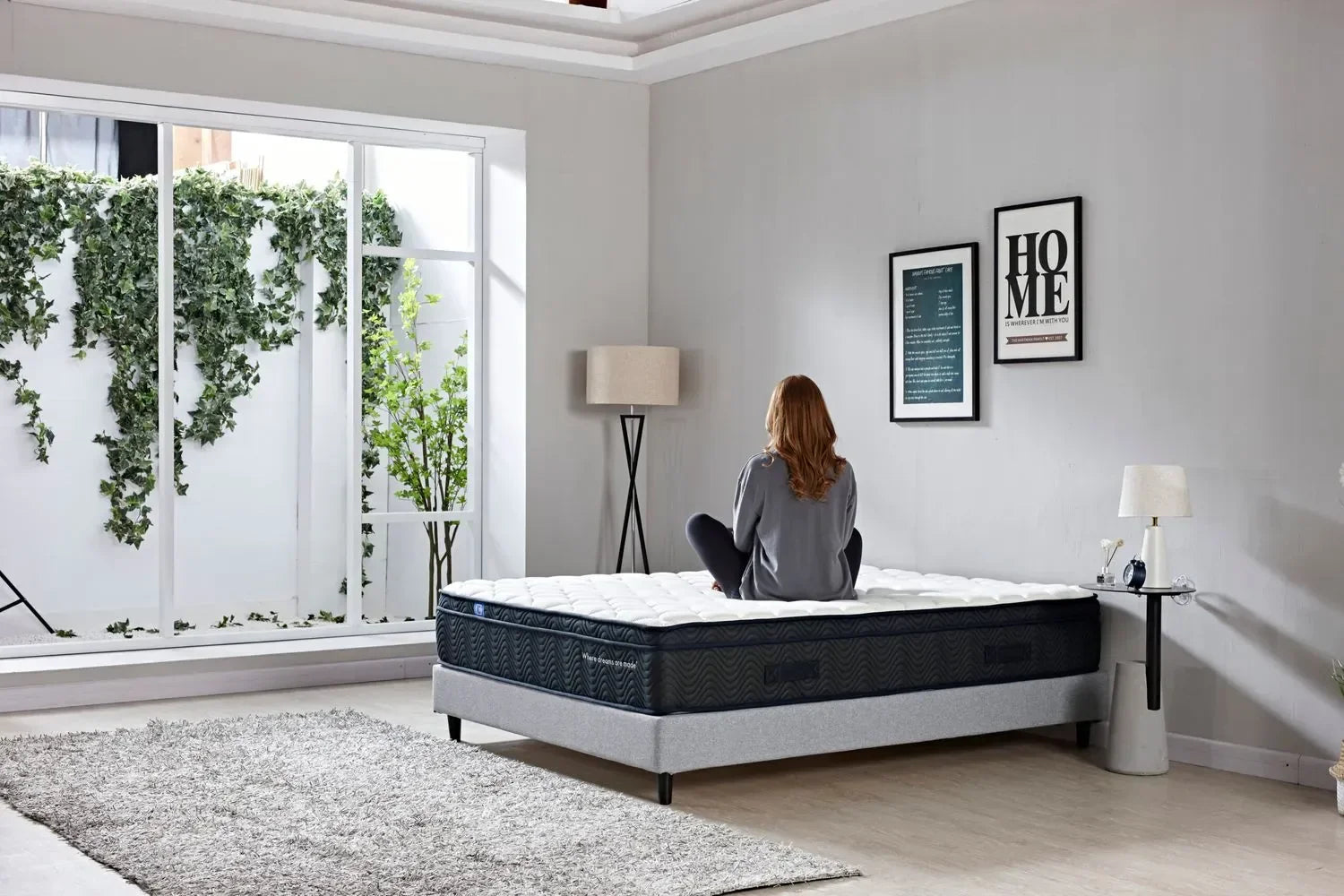
Your guide to choosing the best bed base for your mattress
Why your bed base is the foundation to a good night’s sleep Why are bed bases important? Well, it’s universally accepted that the key to a good night’s sleep is a supportive and comfy mattress. But what many of us don’t realise is that the bed base your mattress sits on is essential in creating and maintaining structure. The bed base is the foundation of your bed ensemble, and finding the right one can be the difference between an okay night’s sleep and a great night’s sleep. Yet there’s still debate over whether a bed base is even necessary at all! In this guide, we walk you through the benefits of having a bed base and how you can find the right one for you. At Sleep Republic, we know that having the right best base for your mattress changes the way you sleep for the better. That’s why we’ve created The Pro Base — a base that’s easy to assemble, easy on the eyes and provides the best support. Why are bed frames important? At a basic level, a bed frame’s purpose is to hold your mattress in place and give you support in your sleep. But the correct bed base can provide so much more. 1. Having extra support Your bed frame needs to support both your weight and the weight of your mattress. With a sturdy bed base, this weight is evenly distributed throughout the bed, helping to avoid sagging and lumps. 2. Keeping your bed hygienic By having a bed base, you’re giving your mattress an extra layer of protection against things like bed bugs, silverfish and dust mites. 3. Creating a comfortable bed height Although some people swear by the magic of having a mattress on the ground, this can be difficult for people with mobility issues. If you have any joint or back problems, having your bed elevated to the correct level is essential. 4. Increasing airflow A bed base elevates a mattress allowing more airflow within the bed ensemble. Increased airflow allows for mattress ventilation which helps you remain cooler when you sleep. 5. Keeping your mattress in place There’s nothing that disturbs your slumber more than a mattress shifting every time you roll over. The right sized bed base will keep your mattress firmly in place. The different types of bed bases Box spring bed bases As the name suggests, the box spring base looks like a box with springs inside. This type of base supports the weight of your mattress and your body and distributes this weight evenly. Box spring bases typically need a headboard for extra stability. Bed frames Bed frames are a structured bed foundation with solid beams. These types of bases are made to fit the dimensions of your mattress and are made from materials like metal, wood and even hard plastic. Bed slats Slatted beds are given their name from the supportive slats that run horizontally across the base. Bed slats can be made from metal beams but more commonly wooden planks. These bed bases are ridged and structurally strong, which helps support against a sagging mattress. Does your bed frame affect sleep in any way? A bed base is the foundation of your bed and gives primary support to your back, joints and neck. So having the wrong bed base will most definitely affect how you sleep. If your bed base is too big, small, low or high, this can make your mattress shift, lift or spill over your bed frame. If you have a weak bed base without proper centre support, this can lead to a sagging or sunk in mattress. Low-quality bed frames can also cause damage to your mattress over time which will affect your overall sleep. But having the right bed frame can help support your body, give better air circulation and allow you to have a longer and more comfortable night’s sleep. It’s all about finding the right bed frame that works for you and your mattress. Why should I buy a bed frame when buying a mattress? Your mattress and bed base is kind of like an iconic duo. So buying them at the same time comes with a lot of benefits, including: Ensuring the mattress fits with your bed base The possibility of getting a cheaper bundle deal Matching accessories like sheets and pillows with your new bed ensemble Buying the best mattress and base combo based on their material and technology Getting a base that fits your interior design, room function and layout Getting the base and mattress delivered together or picking them up at the same time Common bed frame questions How long should a bedframe last for? A bed frame can last as long as 7 – 20 years before being replaced. Wooden bed frames tend to last between 7 – 10 years on average, whereas metal bed frames can survive as long as 15 – 20 years. All bed bases deteriorate up to 70% from its ‘new’ condition after about 10 years because of general wear and tear. What are the dimensions of bed frames? King: 183 × 203 × 29 cm Queen: 152 × 203 × 29 cm Double: 137 × 188 × 29 cm King Single: 107 × 203 × 29 cm Long Single: 92 × 203 × 29 cm Single: 92 × 188 × 29 cm How much does a bed frame cost? Bed frames can cost as low as $150 for very simple metal frames. On the other end of the scale, you can spend upwards of $1200 on a bed frame that might be made from expensive materials or feature extras like storage and draws. The price of a bed frame will always depend on the type of base and the quality of the materials used to make it. However, an average queen-sized bed frame costs between $400 and $500. A mattress on the floor vs a bed frame? There are a lot of reasons why sleep experts suggest you don’t place your mattress on the floor, including: 1. Mobility issues It can be awkward trying to roll off a mattress on the floor, and if you’re somebody who already has bad joints or back issues, this can lead to more injuries for your body. 2. No mattress protection A mattress needs a stable foundation, and although the floor is flat and hard, this doesn’t create the right base for a mattress and can lead to wear and tear over time. 3. No support The ground is incredibly hard and offers no support for your body, especially your back, which can result in uncomfortable sleeping positions. 4. Bad bed hygiene Mattresses left on the floor tend to attract more mould and mildew, especially in warmer environments. These conditions make it easier for things like bed bugs to gain access to your mattress. 5. Restricts airflow A bed base gives your mattress the ability to filtrate air, but with a mattress on the ground, the air becomes trapped in the mattress, ultimately making the warmer bed. It’s time to invest in the right bed base to ensure you’re getting the best night’s sleep! Check out the Sleep Republic Pro Base for a strong, stylish, supportive bed frame. With over 20 years of experience in the mattress industry, Sleep Republic know what helps you sleep at night.
Read more
Why do you need a mattress topper or mattress protector?
We spend around one-third of our lives sleeping, so protecting your sleep environment is just as important as choosing the right mattress. While investing in a high-quality mattress is essential, many people overlook one simple addition that can significantly extend its lifespan and improve hygiene — a mattress protector. If you’ve ever wondered whether you really need a mattress protector, how it differs from a mattress topper, or which option is right for you, this guide breaks it all down. At Sleep Republic, we’ve spent more than 20 years studying what creates truly restorative sleep. Here’s everything you need to know before choosing a mattress protector or topper. Mattress Toppers Explained What Is a Mattress Topper? A mattress topper is a thick, removable layer placed on top of a mattress to change its feel. It’s designed to add extra cushioning, soften a firm mattress, or provide temporary comfort for a mattress that’s no longer at its best. Mattress toppers are commonly made from: Memory foam Latex Wool Cotton or polyester blends Feather or down Bamboo cotton When Does a Mattress Topper Make Sense? A mattress topper can be helpful if: Your mattress feels too firm Your mattress is still relatively new and structurally sound You want an affordable way to add surface comfort When a New Mattress Is the Better Option A topper won’t fix deeper issues. You should consider replacing your mattress if: It’s more than 7–10 years old It’s sagging or uneven You wake up with persistent back, neck, or joint pain A topper may improve comfort temporarily, but it won’t restore support to an ageing mattress. Are Mattress Toppers Washable? Most mattress toppers are washable, but care depends on the material. Wool, cotton, and fibre toppers: Often machine washable (check care labels) Foam toppers: Not machine washable and require spot cleaning How to Clean a Mattress Topper Option 1:Sprinkle baking soda over the topper, leave for several hours, then vacuum thoroughly. Option 2:Mix water with mild detergent in a spray bottle, lightly mist the topper, blot with a sponge, and air dry. How Often Should You Clean a Mattress Topper? Every three months is a good rule of thumb, with more frequent cleaning during warmer months if sweating is an issue. Mattress Protectors Explained What Is a Mattress Protector? A mattress protector is a removable, fitted or encased layer designed to shield your mattress from spills, sweat, allergens, dust mites, and bacteria. Unlike toppers, protectors focus on hygiene and protection, not changing the feel of your mattress. Different styles include: Fitted mattress protectors Elastic strap protectors Fully encased zippered protectors Mattress Protector vs Mattress Topper: What’s the Difference? While they may look similar, they serve very different purposes. Mattress topper: Adds comfort and cushioning Mattress protector: Protects your mattress from stains, moisture, allergens, and wear A mattress protector preserves your mattress’s condition, helps maintain warranty coverage, and supports a cleaner sleep environment. Why You Need a Mattress Protector 1. Protect Your Investment Mattresses are designed to last 7–10 years, but spills, sweat, and stains can shorten that lifespan and void warranties. A mattress protector creates a barrier that helps keep your mattress in top condition for longer. 2. Improve Hygiene and Reduce Allergens Mattresses can harbour dust mites, dead skin cells, mould, and bacteria. A mattress protector adds an extra defence layer, helping reduce allergy triggers and improving overall sleep hygiene. 3. Prevent Stains and Odours From accidental spills to night sweats or bedwetting, a mattress protector makes clean-up simple. Instead of cleaning the mattress itself, you can just remove and wash the protector. 4. Comfort in Every Season A quality mattress protector helps regulate temperature throughout the year. It absorbs moisture in summer and adds a light insulating layer during cooler months without overheating. Are Mattress Protectors Waterproof? Many mattress protectors are waterproof or water-resistant. Cotton blends with a waterproof membrane are especially effective, as they: Absorb moisture Block liquid from reaching the mattress Remain breathable and comfortable If spills, pets, or children are part of your household, a waterproof mattress protector is highly recommended. How to Choose the Right Mattress Protector When selecting a mattress protector, consider: Correct sizing for your mattress Thin, breathable materials that won’t change mattress feel Waterproof and anti-allergy features Ease of washing and care For everyday protection, a fitted, breathable protector works well for most sleepers. You can explore Sleep Republic’s mattress protector designed to provide waterproof protection, allergy resistance, and temperature control without compromising comfort. The Bottom Line A mattress topper can improve comfort, but it won’t fix a worn-out mattress. A mattress protector, however, is one of the smartest ways to extend the life of your mattress, maintain hygiene, and protect your sleep investment. After decades of sleep research and product testing, we believe every mattress deserves proper protection. The right mattress protector helps ensure your bed stays clean, comfortable, and supportive for years to come. FAQs Do I really need a mattress protector? Yes. A mattress protector helps prevent stains, allergens, and moisture from damaging your mattress and supports better sleep hygiene. Will a mattress protector change how my mattress feels? A high-quality mattress protector is thin and breathable, so it won’t affect comfort or firmness. Are waterproof mattress protectors noisy or hot? Modern waterproof protectors are designed to be quiet and breathable, offering protection without overheating. How often should I wash my mattress protector? Every one to two months is ideal, or immediately after any spills or accidents.
Read more